

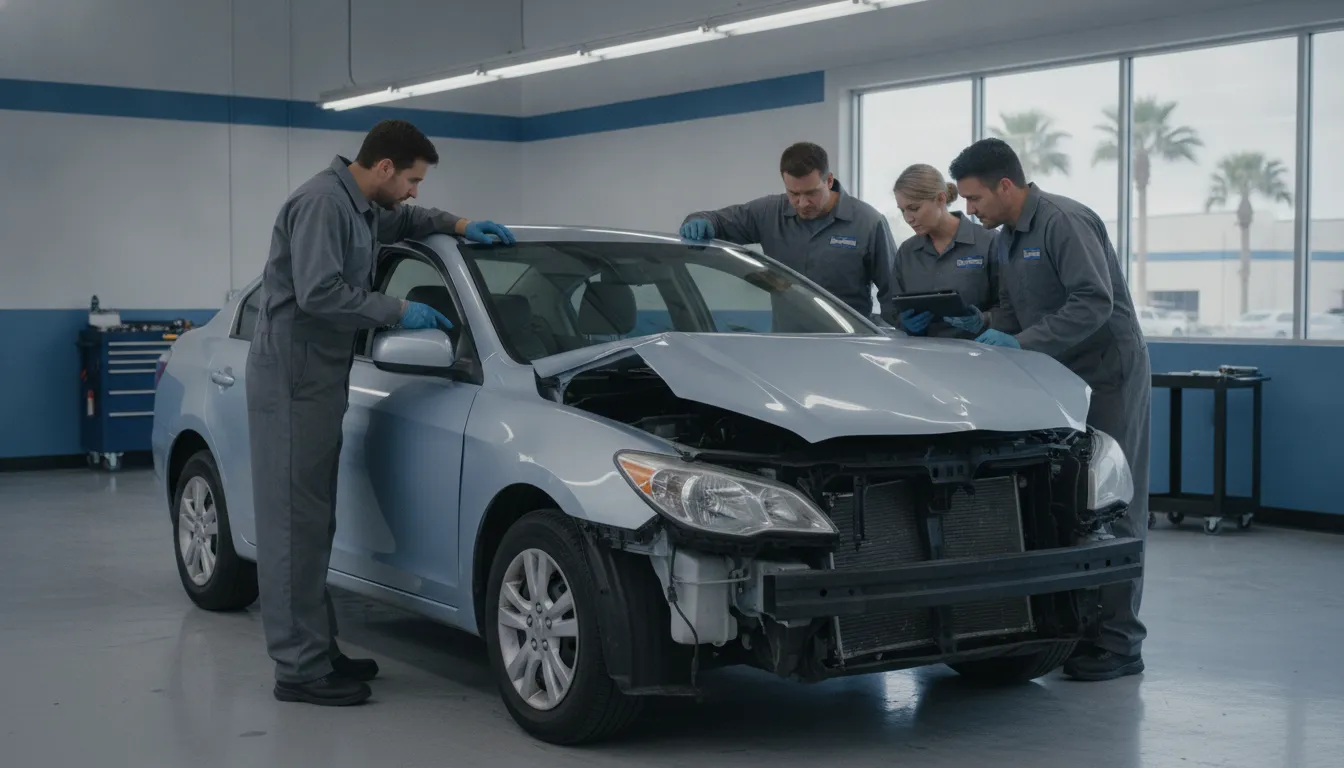
A damaged body panel can look straightforward while hiding important questions about the vehicle’s construction, joining methods, and safety systems. In Orlando, the right repair plan depends on more than whether a panel appears dented or creased.
Steel vs aluminum body repair requires a vehicle-specific assessment because the materials respond differently to stress, reshaping, attachment, and refinishing. Repair or replacement may depend on the damage, the vehicle’s construction, and the applicable manufacturer procedures. Aluminum work can also require dedicated equipment, training, and contamination controls, while high-strength steel may call for its own approved methods.
Understanding these distinctions can help you ask better questions and evaluate whether a proposed repair supports proper fit, function, structural integrity, and safety-system verification. The first step is recognizing how steel and aluminum behave differently when a collision changes the shape of a panel.
What Is Different About Steel and Aluminum Body Panels?
Body panels can look similar from the outside, but the material underneath affects how collision damage behaves and how a technician approaches the repair. Traditional steel, high-strength steel, and aluminum each respond differently when bent, stretched, dented, or exposed to heat. That is why a proper assessment considers more than the visible shape of a damaged panel.
Steel, high-strength steel, and aluminum serve different roles
Steel remains common in vehicle construction because it can be formed into precise shapes and used in both body panels and structural areas. Conventional steel and high-strength steel are not identical, however. High-strength steel is engineered to provide specific strength and performance characteristics, so the repair process must account for the grade and the location of the component. A method that may be appropriate for one steel part may not be appropriate for another.
Aluminum is a separate material with different properties. It may be used for exterior panels, structural components, or other vehicle parts. When aluminum is damaged, its response to reshaping and attachment can differ from steel. Aluminum repair may involve dedicated equipment, material-specific preparation, and attachment methods such as rivet bonding or resistance spot welding when required by the vehicle’s repair information.
Modern vehicles can combine several materials in one construction. A vehicle may include conventional steel, high-strength steel, aluminum, composites, electronics, and advanced driver assistance systems. The panel visible after a collision may therefore be only one part of a larger repair decision. Technicians need to identify the material, inspect adjacent components, and determine whether the damage affects a structural area or a safety-related system.
Material choice does not by itself establish whether a vehicle is safer, less expensive, or quicker to repair. Those conclusions depend on the vehicle design, damage pattern, repair access, applicable manufacturer instructions, and whether a component can be repaired or needs replacement. Even two vehicles with similar-looking dents may require different procedures.
For Orlando drivers, the practical question is not which material is universally better. It is whether the shop has correctly identified the materials involved and is using a repair method that protects fit. Function, structural integrity, and the vehicle’s required safety systems. That assessment leads into the specific differences between steel vs aluminum body repair, including tools, joining methods, contamination control, and refinishing requirements.
How Does Steel vs Aluminum Body Repair Differ?
The practical difference in steel vs aluminum body repair is not simply the material named on the estimate. Each material responds differently to force, reshaping, joining, corrosion protection, and refinishing. A vehicle may also use high-strength steel, aluminum, composites, electronics, and ADAS components in the same construction. That is why the repair plan should follow the vehicle’s construction, the damage assessment, and applicable manufacturer procedures.
| Repair consideration | Steel | Aluminum |
|---|---|---|
| Forming and reshaping | Depending on the panel and damage, technicians may use controlled pulling, shaping, and panel repair methods suited to the steel grade. | Reshaping requires material-specific techniques because aluminum does not behave exactly like steel under force. The vehicle’s repair information determines whether a damaged component is repairable. |
| Joining | Joining may involve welding or other methods specified for the vehicle’s construction and steel type. | Repair may involve methods such as rivet bonding, resistance spot welding, or other approved attachment processes. Traditional steel methods cannot simply be transferred to aluminum. |
| Contamination control | Steel work uses equipment and preparation appropriate for the steel repair process. | Aluminum work requires separation from steel contamination, dedicated equipment, and careful preparation to protect the repair and its corrosion resistance. |
| Repair or replacement | A panel may be repaired or replaced based on damage, construction, and manufacturer instructions. | A component may require repair, partial replacement, or replacement when the damage or construction does not support an approved repair. The material alone does not decide the outcome. |
| Refinishing | After body work, the surface must be prepared and refinished to support proper fit, appearance, and corrosion protection. | Aluminum repairs require material-appropriate preparation and sealing before refinishing. Paint matching and final finish remain part of restoring the vehicle’s appearance. |
Contamination control is especially important when a facility works on both metals. Steel particles or shared tools can compromise aluminum preparation, so the process may call for dedicated work areas, tools, and equipment. The technical team should also use the attachment sequence specified for the vehicle rather than selecting a joining method based only on convenience.
Repair versus replacement is a documented decision, not a universal rule. Damage location, depth, access, material, structural role, and manufacturer guidance all matter. High-strength steel and aluminum are not interchangeable versions of ordinary steel, and a visible dent may not reveal the full condition of the panel or adjacent structure.
For a closer look at the equipment and training involved, see our guide to aluminum auto body repair. Collision Center Orlando can evaluate the vehicle in the context of its construction and applicable repair procedures. Then address refinishing, fit, structural integrity, and safety-system verification as part of the broader restoration process.
Does Aluminum Require Different Tools and Equipment?
Often, yes. Aluminum is not simply a lighter version of conventional steel, so a repair facility may need dedicated equipment, material-specific processes, and trained technicians. The exact requirements depend on the vehicle’s construction, the location and severity of the damage, and the applicable manufacturer instructions. A proper assessment should identify those factors before anyone decides whether a panel can be repaired or should be replaced.
Keeping aluminum work separate
One important concern is contamination. Grinding and sanding create metal dust and particles, and steel tools or debris should not be introduced into an aluminum repair area. For that reason, aluminum operations may use separate work areas, tools, dust-control equipment, and cleaning procedures. The goal is to keep the repair surface controlled as the work moves from metal repair to preparation and refinishing. This is a process requirement, not a reason to assume that every aluminum repair needs the same setup.
Separation also helps technicians follow the vehicle’s repair instructions more consistently. Aluminum components and high-strength steel components can appear together in one vehicle, but they are not interchangeable materials. Treating them as though they respond identically to pulling, grinding, heating, or joining can affect fit, finish, and the integrity of the repair.
Different attachment methods and technician training
Depending on the vehicle and the damaged component. Aluminum work may involve attachment methods such as rivet bonding or resistance spot welding rather than relying on conventional steel repair techniques. Dedicated equipment must be used correctly, and technicians need training in the relevant procedures, measurements, and material behavior. Collision Center Orlando documents aluminum component repair with dedicated equipment and these advanced attachment methods as part of its technical capabilities. Its confirmed Genesis OE certification also includes capability for vehicle materials such as aluminum and composites.
Equipment alone does not determine the outcome. A shop should be able to connect its tools and training to the manufacturer’s instructions for the specific vehicle. That may affect repair-versus-replacement decisions, joining methods, inspections, and any required safety-system checks. It also means tooling should not be presented as a universal promise of lower cost or faster completion. Damage evaluation comes first.
For a closer look at the material-specific considerations, review this aluminum repair guidance. Orlando drivers comparing steel vs aluminum body repair can use that information to ask what equipment. Training, and repair sequence apply to their vehicle, rather than assuming one method fits every model.
Why Do Manufacturer Repair Procedures Matter?
Manufacturer repair procedures translate a vehicle’s design into a repair plan. That matters because a modern vehicle may combine high-strength steel, aluminum, composites, electronics, and advanced driver assistance systems. The correct method depends on the vehicle, the damaged area, the material, and the applicable instructions. A general approach that works for one panel or model may not be appropriate for another.
Material, parts, and attachment methods
Manufacturer guidance helps a repair team determine whether a damaged component should be repaired or replaced, which OE parts are appropriate, and how those parts should be attached. The instructions may address forming limits, sectioning locations, welds, rivets, adhesives, or other joining methods. Aluminum and high-strength steel are not interchangeable versions of conventional steel, so material-specific equipment, preparation, and technician training can affect the repair plan.
Contamination control is also important when aluminum work is involved. Aluminum repair can require dedicated equipment and separation from steel-related contamination, along with attachment methods such as rivet bonding or resistance spot welding when specified for the vehicle. These details are practical safeguards for fit, function, and the intended performance of the repaired area, not simply technical preferences.
Structural integrity and inspections
For damage involving structural components, the goal is to restore the vehicle’s structure toward documented OEM tolerances using the applicable repair information. A comprehensive damage evaluation helps identify visible and hidden damage before work begins. You can learn more about structural repair and OEM tolerances when evaluating a frame or structural concern.
Manufacturer procedures also support quality assurance and inspection. Collision Center Orlando documents a process that includes OE-procedure repair execution, quality assurance, multi-point inspection, and safety-system verification. These checkpoints help the team evaluate whether repairs, panel fit, structural work, and related systems have been addressed before delivery. They do not replace a vehicle-specific assessment, but they create a clearer standard for checking the work.
Safety systems require verification
A collision can affect more than the exterior panel. Sensors, wiring, restraint components, cameras, and other safety-related systems may require diagnostic scanning, inspection, or calibration according to the vehicle’s instructions. Manufacturer-specific sequences help guide that verification after structural or body repairs. Following manufacturer repair procedures gives the repair team a documented reference instead of relying on assumptions.
Collision Center Orlando has confirmed OE certifications for Kia, Genesis, and Nissan. The documented Kia program includes access to Kia technical information and repair procedures, including guidance for construction that can involve high-strength steel. The Genesis certification includes capabilities for materials such as aluminum and composites, along with access to Genesis technical support and engineering consultation. These certifications should be understood specifically, rather than generalized to every vehicle make.
For Orlando drivers comparing steel vs aluminum body repair, asking which manufacturer procedure applies is a useful first step. It helps connect the material, parts, attachment method, inspection plan, and safety-system verification to the vehicle being repaired.
What Should Orlando Drivers Ask Before Authorizing Repair?
Before approving steel or aluminum body repair, ask questions that connect the estimate to your vehicle’s construction and the applicable manufacturer instructions. A clear conversation helps you understand whether the proposed work addresses fit, function, structural integrity, and safety systems, rather than focusing only on visible panel damage.
- How did you identify the damaged material? Ask whether the affected area uses conventional steel, high-strength steel, aluminum, a composite, or a mixed-material design. Material type can change the forming, joining, tooling, and finishing process. Aluminum and high-strength steel should not be treated as interchangeable versions of conventional steel.
- Which manufacturer procedure applies to this repair? Ask the shop to identify the relevant repair specifications and explain how they guide the method. Manufacturer-specific instructions can address sectioning locations, attachment methods, structural measurements, corrosion protection, and required inspections. Collision Center Orlando describes its work as using OE-certified procedures and manufacturer-specific repair specifications.
- Is repair or replacement appropriate, and why? Request an explanation based on the vehicle’s construction, the location and severity of the damage, and the manufacturer’s guidance. A panel decision should not be based on a universal rule that all steel can be repaired or all aluminum must be replaced.
- What equipment and training are needed? For aluminum work, ask whether the facility uses dedicated equipment and controls separation from steel repair to help prevent contamination. You can also ask about the technician’s experience with the relevant material and attachment methods. Documented capabilities may include aluminum repair, rivet bonding, and resistance spot welding. Learn what OE-certified collision repair means for equipment, training, and procedures.
- Are OE parts specified where the procedure calls for them? Ask which replacement components are included in the estimate and whether the proposed parts align with the manufacturer’s repair guidance. The estimate should make clear what is being repaired, replaced, refinished, or recalibrated.
- How will the completed repair be checked? Ask how the shop will verify panel gaps, alignment, fit, finish, structural integrity, and the operation of safety systems. A complete process may include quality assurance, a multi-point inspection, diagnostic checks, and safety-system verification. For help reviewing the scope with a local team, see the Orlando collision repair service.
Review booking options for your Orlando repair.
Frequently Asked Questions
Can aluminum body panels be repaired?
Yes, some aluminum panels and components can be repaired, but the decision depends on the vehicle, damage, material behavior, and applicable manufacturer procedure. Aluminum work may require dedicated equipment, contamination control, and specific attachment methods. In other cases, replacement is the appropriate path.
Is steel or aluminum better for auto body repair?
Neither material is universally better for every repair. Steel and aluminum respond differently to impact, reshaping, joining, and refinishing. A qualified assessment should identify the vehicle construction and damage before determining whether repair or replacement best supports fit, function, structural integrity, and safety.
Does aluminum body repair require different tools?
Often, yes. Aluminum component repair may involve dedicated equipment, material separation from steel work, technician training, and attachment methods such as rivet bonding or resistance spot welding. The required process should follow the vehicle manufacturer’s instructions rather than a generic steel repair workflow.
Why do manufacturer repair procedures matter?
Manufacturer procedures address the vehicle’s materials, joining methods, structural requirements, parts, inspections, and safety systems. Following the applicable guidance helps the repair team evaluate damage accurately and verify fit, function, structural integrity, and safety-system operation before delivery.
What should I ask a body shop about a mixed-material vehicle?
Ask how the shop identified the materials, which manufacturer procedure applies, whether repair or replacement is recommended, and what equipment and training support the work. Also ask how the shop will check refinishing, structural integrity, and safety-system operation after repairs.
Schedule Your Orlando Collision Repair Estimate
Steel and aluminum damage can call for different repair methods, equipment, and manufacturer procedures. A careful evaluation helps clarify the appropriate next step for your vehicle and supports a proper restoration plan.