

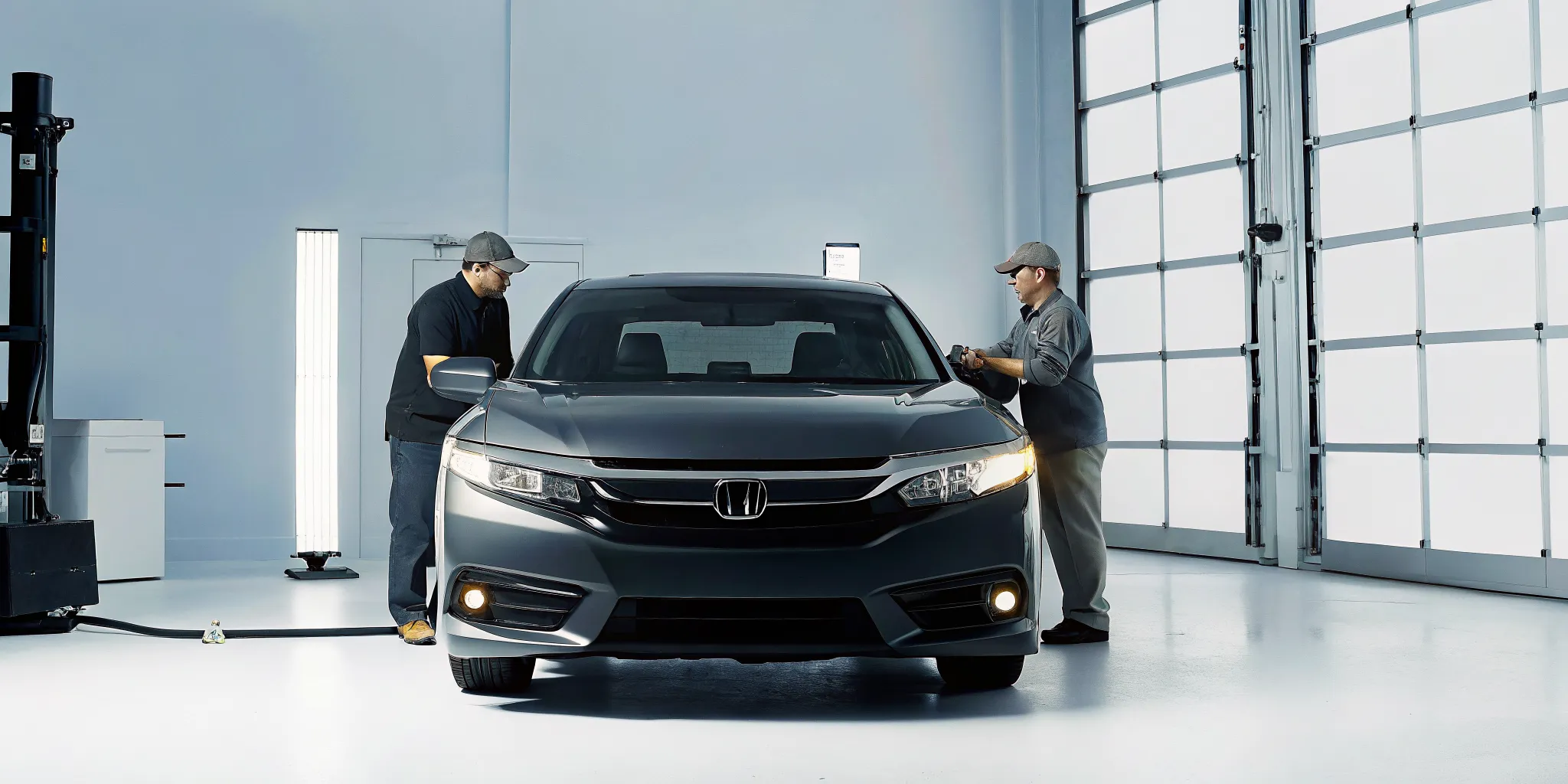
An auto accident on busy Orlando roads can instantly compromise the safety systems of your Honda.
Honda certified collision repair Orlando is the factory-approved process of restoring your damaged vehicle to its original structural integrity, safety, and performance standards. To protect your vehicle warranty and structural safety, certified facilities use specialized manufacturer tools and Honda Genuine Parts that fit your model exactly. These shops must undergo ongoing training and pass tough annual facility inspections to keep their certified status with the manufacturer. This strict repair process guarantees that advanced safety features like lane-keep assist and pre-collision braking are calibrated to factory specs. Choosing an OEM-certified auto body shop ensures your vehicle is repaired to original standards and retains its maximum resale value.
If you want to protect your family and your investment, you need to know what goes into a factory-approved fix. Understanding how these manufacturer standards protect your car is the first step toward a safe recovery. To understand this standard, we must first look at What Is Honda Certified Collision Repair.
Honda Certified Collision Repair Orlando: What Is Honda Certified Collision Repair?
A car crash is stressful, but getting the right fix should not be. When your car has body damage, you need a shop that knows how to repair it. A collision repair service in Orlando with the right tools can restore your car to factory safety standards. This is where a certified program helps. Honda certified collision repair is a official program that guarantees a shop can restore your vehicle back to how it was built.
The ProFirst Program Standards
American Honda manages its certified shop network through the ProFirst program. To join, a shop must meet strict criteria. The facility must have a clean customer lounge, high-quality tools, and certified staff. American Honda works with CCC Intelligent Solutions to perform on-site shop inspections every year. These annual visits verify that the shop’s repair methods, tools, materials, and equipment align with what the manufacturer recommends. This third-party verification keeps shops accountable and ensures your Honda gets a safe, high-quality repair.
Continuous Technician Training and Education
Modern Honda cars are built with advanced safety systems and complex metal frames. A shop cannot fix these vehicles without the right training. For a shop to qualify, it must hold the I-CAR Gold Class designation. This is the highest role for class training in the collision industry. Technicians must also complete ongoing, Honda-specific classes. This education covers topics like structural aluminum repair, welding, and how to fix electric vehicles. Estimators and structural techs must pass these classes to keep up with new car technology.
Official Factory Data and Service Information
A certified shop does not guess how to fix your vehicle. Certified facilities have direct access to all official service and collision repair information. This includes data for all years and models of Honda cars, from compact cars to SUVs. Technicians use this official database to look up exact factory steps for every fix. This information helps them repair structural parts and calibrate safety sensors like cameras or radar. At Collision Center Orlando, we hold Honda certification alongside 13 other major brands. This means we apply the highest manufacturer standards to every vehicle that enters our shop.
Why Honda Certified Repairs Matter for Your Safety and Vehicle Value
When your car is in an accident, how you choose to repair it will affect both your safety and its long-term worth. A certified repair does not just fix how the car looks on the outside. It ensures the vehicle is rebuilt to the precise safety and structural standards set by the maker.
Protecting Your Safety with Honda Genuine Parts
Using the right parts is the first step in a safe repair. Many shops use cheap aftermarket parts to save money. But generic parts are not built to the same strict standards as factory parts. Honda Genuine Parts are designed to meet exact factory specifications. This ensures a proper fit and consistent performance during a future crash. Choosing factory parts helps protect the built-in safety systems that keep you and your family safe on the road.
The Critical Need for ADAS Calibration
Modern cars rely on Advanced Driver Assistance Systems, or ADAS, to help prevent crashes. This system includes features like Adaptive Cruise Control, LaneWatch, and pre-collision braking. These tools use cameras, radar, and sensors to monitor the road. If a sensor is off by even a tiny fraction of an inch, it can fail to work when you need it most. It could slam on the brakes for no reason or fail to warn you of a hazard.
Proper ADAS calibration requires specific, manufacturer-approved tools and diagnostic systems. Technicians must complete specialized training to perform these delicate tasks correctly. Without this expert service, your vehicle’s safety features may not protect you as they should.
| Factor | Certified Shop | Non-Certified Shop |
|---|---|---|
| Parts Used | Honda Genuine Parts only | Generic aftermarket parts |
| Technician Training | I-CAR Gold Class + Honda-specific courses | No standardized training requirement |
| Repair Procedures | Factory-approved methods from Honda database | General body shop techniques |
| ADAS Calibration | Manufacturer tools and certified techs | Often skipped or done without proper tools |
| Warranty Impact | Preserves factory warranty | May void warranty |
| Resale Value | Maintained with documented certified repair history | Reduced due to non-OEM parts and methods |
Preserving Structural Integrity and Crumple Zones
A vehicle’s frame is designed to absorb the force of a crash to protect the people inside. This is done through crumple zones built with high-strength steel. If a shop does not follow official Honda manufacturer repair procedures, they can ruin this structure. Heating high-strength steel the wrong way can make it weak. Using incorrect welding techniques can cause the frame to fail in another accident. Certified repairs guarantee that the structure is rebuilt safely using the exact tools and methods approved by the manufacturer.
Maintaining Your Warranty and Resale Value
Getting your car fixed at a certified shop is also a smart financial choice. First, it helps with warranty preservation. If a non-certified shop does improper work, it can void your factory warranty. Second, it helps retain your vehicle’s resale value. Buyers and dealers look for a clean repair history. Showing that your car was fixed by a certified center using factory parts ensures that it keeps its value over time.
Navigating Insurance Claims for Certified Collision Repairs
Dealing with car insurance after a car crash can feel like a chore. Many drivers do not know that they have the right to choose their own repair shop. Insurance firms may try to steer you to shops in their own networks, but these shops do not always have the proper tools or skills. Choosing a shop with a focus on insurance claim support for collision repair ensures your car gets the care it needs. This choice is vital if you want to use parts that meet factory standards for your Honda.
How We Advocate for Your Repair Choice
When you bring your car to our shop, we act as your guide. Insurance agents often push for cheap, generic parts to save cash. We stand up for you by showing them why genuine parts are needed to keep your vehicle safe. Under Florida law, you have the absolute right to select where your car is fixed. Our team works with your provider to explain why factory-approved methods are the only safe option for your Honda certified collision repair Orlando.
Understanding the Insurance Supplement Process
Often, the first estimate from an insurer only covers what they can see on the outside. Once we take the car apart, we often find hidden damage to structural frames or safety sensors. When this happens, we start the supplement process. This step is a formal request for more funds to cover these hidden issues. We document every detail with clear photos and official repair guides straight from the builder to show the insurer why this extra work is needed.
Why Insurers Must Cover Certified Procedures
Modern cars have complex safety systems that need specific tools to fix. Insurers must cover these costs because improper repairs can put your life at risk. For example, if a shop does not set up your safety sensors correctly, your brakes or lane alerts might fail when you need them. The team at Collision Center Orlando, located at 6958 Venture Circle in Orlando, FL, works directly with insurers to ensure they pay for these necessary steps. This ensures your car is safe to drive before it leaves our shop, as outlined in official manufacturer repair guidelines on American Honda’s collision resource page.
How to Choose the Right Honda Certified Collision Center in Orlando
Selecting the right shop for your vehicle is a critical step to ensure safe repairs. When you need choosing an auto body shop in Orlando, following a clear process will lead you to a certified facility that meets factory standards.
Verify Certifications and Training
First, check for official designations. A qualified shop must hold the ProFirst or Honda Certified Collision Repair title. You should also confirm that they have the I-CAR Gold Class designation. This standard proves that the team completes regular, manufacturer-specific training to stay updated on the latest vehicle tech.
Ask About Parts and Safety Systems
Next, ask the team about the parts and tools they use. Ensure the facility works with genuine Honda parts to preserve your warranty and resale value. You must also ask about their system calibration capabilities. Modern safety features require specialized tools for proper recalibration after a crash.
You can find a reliable partner by following these steps. Each step helps you make the right call.
- Check the ProFirst Status: Verify that the shop is an active member of the Honda certified network, which requires annual third-party inspections to confirm proper tools and facility standards.
- Confirm I-CAR Gold Class Training: Ensure the facility maintains the I-CAR Gold Class Professional status, meaning their technicians complete ongoing education for Honda vehicles.
- Demand Genuine Honda Parts: Ask if the shop uses authentic parts designed for your exact model to maintain structural integrity and fit.
- Verify ADAS Calibration: Confirm that the shop has the specific tools and training needed to calibrate your car’s advanced driver assist systems correctly.
- Assess Facility and Local Reputation: Look for a clean, professional customer space and strong local reviews from other car owners in the area.
Frequently Asked Questions
What does Honda Certified Collision Repair mean?
This means a shop meets strict standards set by the manufacturer. To earn this title, a shop must pass annual inspections by American Honda to verify their tools and facility. Technicians must also complete specialized training. This training includes I-CAR courses and Honda-specific classes on safety technology. These standards ensure your vehicle is repaired to original factory specifications.
Are genuine Honda parts used in certified repairs?
Yes, certified facilities prioritize original equipment manufacturer parts. These genuine parts are designed specifically for your vehicle model. They fit perfectly and preserve your original factory warranty. Unlike cheap aftermarket parts, genuine parts undergo rigorous safety testing. Using them helps maintain the structural integrity of your vehicle and protects its long-term resale value after an accident.
Does a certified collision repair cost more?
No, certified repairs do not automatically cost more than standard repairs. The labor rates are competitive with other high-quality shops in the area. The main cost factor is whether you use genuine parts or aftermarket parts. Certified shops focus on restoring your vehicle safely using factory methods. They will work with you to explain any cost differences before the repair work begins.
Will insurance cover Honda certified collision repairs?
Yes, most insurance policies cover repairs at certified facilities. You have the legal right to choose where your vehicle is repaired. Collision Center Orlando works directly with your insurance company to handle the claim. Our team manages the paperwork and negotiates any needed supplements. This support ensures the insurer covers the safe, factory-approved repair methods your vehicle requires.
How do I find a Honda certified collision repair shop in Orlando?
You can find a certified shop by looking for the official ProFirst or Honda Certified designation. You can also search the official manufacturer directory online. Collision Center Orlando is a certified facility serving the entire Central Florida area. Our shop is located at 6958 Venture Circle, Orlando, FL. You can contact us directly to schedule a free consultation for your vehicle.
Schedule Your Honda Certified Collision Repair Consultation
Delaying certified repairs on your damaged vehicle can compromise structural integrity and put your family at risk. Choosing a factory-approved shop immediately ensures your safety features work correctly and preserves your car’s long-term resale value. Our team uses certified tools and techniques to restore your vehicle to its pre-accident condition right away.
Ready to schedule a Honda certified collision repair consultation? Call (321) 972-1549 to speak with our collision experts in Orlando today.