

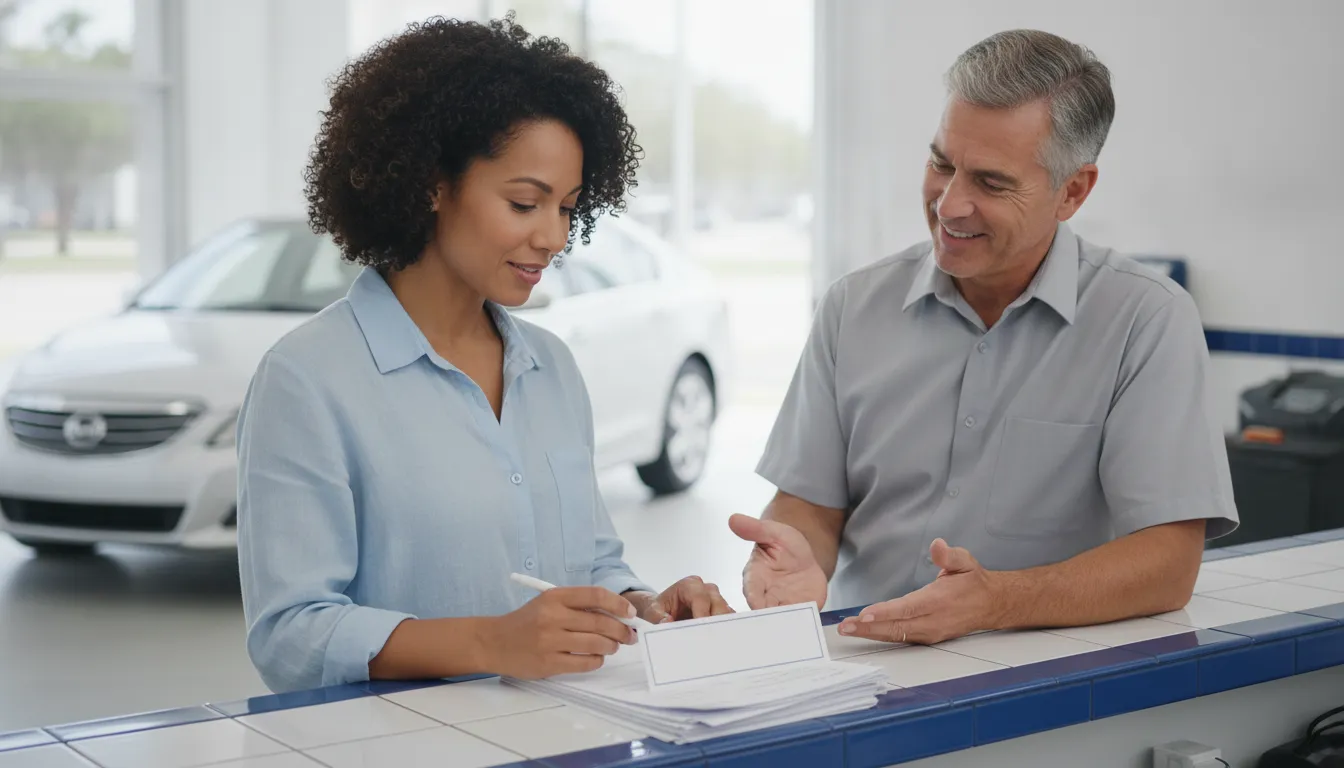
If you are searching for how to cash insurance check for car repairs, start by slowing down before you sign or deposit it. The check may be payable to you, a lender, a repair shop, or more than one party. The right next step depends on the payee line, your policy, any loan documents, and the repair shop’s written payment process.
In Florida, there is no single check-handling process that fits every claim. Confirm the instructions with the insurance company, lender or lienholder, and repair facility. Keep copies of the estimate, claim correspondence, and payment records so you can track what the payment covers and what still needs to be resolved.
This guide explains what to review, who may need to endorse a check, and how a repair shop can fit into the payment process. It also covers which documents to keep. This is general educational information, not legal or insurance advice. We will begin with the payee and policy details that determine what happens next.
How to Cash Insurance Check for Car Repairs When a Lender Is Listed
The first step in learning how to cash insurance check for car repairs is not taking the check to a bank. It is reviewing the information that controls how the payment can be used. Start with the payee line. Confirm whether the check is made out to you alone, you and a lender, you and the repair shop, or several parties.
Next, compare the check with the insurer’s claim correspondence and repair estimate. An initial payment may be an advance against a larger settlement rather than the final payment. If the vehicle has not been fully disassembled, the first estimate may not include hidden damage. A later supplement or updated estimate may change the repair plan and the amount under discussion.
Review your policy and any loan or lease documents for payment instructions. Florida policy and lender requirements vary by situation. A financed vehicle may involve a lienholder because that lender has a financial interest in the vehicle. Do not assume that a bank, insurer, or repair shop will accept an endorsement that omits another named payee.
Before signing the back of the check, ask specific questions:
- Who must endorse this check?
- Should it be deposited into a personal account, a joint account, or a lender-controlled account?
- Will the insurer issue a revised payment if the repair estimate changes?
- Does the repair shop have a written process for checks made payable to multiple parties?
- Which documents should be submitted before funds are released?
Ask for answers in writing when possible. Keep the original check secure, and do not alter or sign it until you understand the required sequence. If the check information is unclear, contact the insurer and any lender listed on the check first. A collision repair shop can often help coordinate claim documentation, but it cannot replace the policy, loan documents, or instructions from the named payees.
Who May Need to Sign the Check?
The names printed on the check usually tell you why cashing an insurance payment is not always a one-person transaction. A payment may be issued to the vehicle owner, a lender or lienholder, the repair shop, or multiple parties. Each named payee may have a role in approving, depositing, or applying the funds.
| Payee named | What to confirm before signing |
|---|---|
| Vehicle owner | Whether the insurer issued the payment to you alone and what the payment covers. |
| Lender or lienholder | Whether it must endorse, receive, hold, or release the funds. |
| Repair shop | How the shop handles the check, repair authorization, and payment records. |
| Multiple payees | Which parties must sign and what order the insurer or bank requires. |
When the vehicle is financed
If a lender is listed because the vehicle is financed, the lender may require its own endorsement or have a process for handling the funds. General insurance claim guidance explains that a financial backer named as a co-payee may need to endorse the payment before it can be deposited. Some lenders may place funds in an escrow account, release money as repairs progress, or request an estimate before releasing payment. Those are possible arrangements, not a universal rule.
Contact the lender using the information in your loan documents. Ask where the check should be sent, whether the lender needs a repair estimate or inspection, and what proof is needed for a release. A lender may also want documentation showing that the repair work is complete before releasing remaining funds. Do not rely on a general internet answer when your loan agreement or lender provides different instructions.
When the shop is listed
A repair shop may appear as a payee when the insurer is paying the shop directly or when the payment is tied to an agreed repair plan. Ask the shop how it handles a check with multiple payees before you endorse it. Confirm whether the shop needs the original check, a copy, claim information, or a signed authorization.
Do not sign over a check simply because someone says it is routine. Verify the names, the amount, and the purpose of the payment with the insurer and the other named parties. If a document is presented as a direction to pay or an assignment, read it carefully. A direction-to-pay form may authorize an insurer to pay a firm directly, while a broader assignment can affect who controls the claim. This article is not legal advice, so ask questions before signing any document you do not understand.
How the Repair Shop Fits Into the Payment Process
In many claims, the repair shop is part of the communication chain even when it is not the only party involved in payment. The insurer may pay the vehicle owner, a lienholder, or the body shop after repairs have been discussed. The exact arrangement depends on the claim, payee names, financing, policy terms, and the shop’s written process.
Collision Center Orlando’s documented service model includes comprehensive damage evaluation, estimates, insurance coordination, and customer consultations. That means the shop can help organize repair information and communicate about the damage and estimate. It does not mean the shop can decide how an insurer or lender must issue, endorse, or release a check.
Before repairs begin, ask for a clear explanation of the estimate and the payment steps. Find out whether the insurer has issued an initial payment, whether additional damage could require a supplement, and which party receives each payment. Keep your own copies of written estimates, supplements, claim messages, and receipts.
You may also encounter a direction-to-pay form. In general claim guidance, this type of form can allow an insurer to pay a repair business directly. Read the form carefully. Confirm whether it only addresses payment for the stated repair or contains broader language about assigning the claim. If the language is unclear, ask the insurer and consider getting qualified legal advice before signing.
For Orlando drivers, a guide to navigating an auto body claim can provide broader process context. Collision Center Orlando can also explain its repair-side workflow while the insurer and lender remain responsible for their own claim and payment requirements.
What Repair Documents Should You Keep?
Good records make it easier to compare the insurance payment with the repair plan. Create one folder, either paper or digital, for the claim. Save the original estimate and every revised estimate or supplement. Hidden damage discovered during disassembly can change the work required, so a revised document may be important later. Learn more about understanding your repair estimate when you review the numbers.
Keep the following items together:
- The insurance claim number and claim adjuster contact information.
- The insurer’s payment letter, check image, and correspondence.
- The initial estimate and any supplements or revised estimates.
- Photos of the vehicle damage and repair progress when available.
- Repair authorizations, direction-to-pay forms, and other signed documents.
- Invoices, receipts, deductible records, and payment confirmations.
- Lender or lienholder instructions and proof of any released funds.
- Final repair documentation and inspection records supplied by the shop.
Do not assume that the first check closes the financial side of the claim. State insurance guidance notes that an initial payment may be an advance against the total settlement. If additional damage is found, the claim may need a supplement or additional review, subject to the policy and the insurer’s process. Keep the related messages and revised estimates instead of discarding them after the first payment.
Collision Center Orlando emphasizes detailed consultations, accurate damage evaluation, and documentation throughout the repair process. Its service model also includes multi-point inspections and safety-system verification before customer delivery. Those steps are part of repair quality and documentation. They do not change your policy obligations or guarantee a particular insurance payment.
What If the Check Does Not Cover the Final Repair Plan?
A payment can differ from the estimate you expected for several reasons. The insurer may have issued an initial advance. The repair plan may have changed after a closer inspection. Or the check may have been prepared for a different payee arrangement. A difference does not automatically tell you who is right or what you should do with the funds.
Pause before depositing or endorsing the check if the amount, payee line, or repair description does not match your records. Contact the adjuster and ask what the payment covers. Ask the shop to explain any difference between the insurer’s estimate and the shop’s estimate.
If the vehicle is financed, contact the lender too. Keep a written record of who you spoke with, what was requested, and which documents must be submitted.
Hidden damage may require a supplement or updated estimate during the repair process. A supplement is documentation of additional work or parts that were not included in an earlier estimate. The insurer may have its own review process for supplements. Do not promise yourself that an additional amount will be approved. Instead, ask how the new damage will be documented and whether the repair can proceed while the supplement is reviewed.
When repairs are complete, review the final invoice and repair documents. Collision Center Orlando’s documented process includes safety-system verification and multi-point inspections before customer delivery.
Ask the shop what records it can provide and compare them with the payment and estimate documents you already saved. If a disagreement remains, use the insurer’s claim escalation process and review your policy. For questions that require legal interpretation, consult a qualified Florida professional.
The safest approach is a documented one: do not guess about a check, do not sign a document you do not understand, and do not discard the paperwork that explains how the repair plan changed.
Florida Insurance Repair Check Checklist
Use this checklist as a starting point, then follow the specific instructions from your insurer, lender, and repair shop. It is general information, not a substitute for your policy or professional advice.
- Read the payee line. Identify every person, lender, lienholder, or repair business named on the check.
- Match the payment to the claim. Compare the check, payment letter, claim number, and estimate. Note whether the insurer describes it as an initial or final payment.
- Check financing documents. If a lender or lienholder is listed, ask where the check goes, who endorses it, and what documents or inspections are required.
- Ask the repair shop about its process. Confirm how it handles multiple-payee checks, repair authorizations, supplements, and payment records.
- Document the repair plan. Save photos, estimates, revised supplements, invoices, receipts, correspondence, and signed forms.
- Clarify differences before signing. If the amount, payees, or repair scope does not match, contact the insurer, lender, and shop before endorsing or depositing the check.
- Review final records. Keep the final invoice and any inspection or safety-system documentation with the rest of the claim file.
Collision Center Orlando serves vehicle owners across Greater Orlando with collision repair, body and paint work, insurance coordination, and repair documentation. If you want to discuss the repair side of a claim, gather your estimate and claim information before reaching out. A shop can explain its process while the insurer and lender remain responsible for their own payment instructions.
Request collision repair help before you endorse or deposit a repair check
Frequently Asked Questions
Can I cash an insurance check made out to me and my lender?
Usually, you should not assume you can deposit it without the lender’s involvement. Review the check and loan documents, then ask the lender whether it must endorse the check, receive it, place funds in escrow, or follow another process. The requirement depends on the lender and the documents tied to the vehicle.
Can an insurance company pay the body shop directly?
It may be possible when the claim and payment arrangement support direct payment. Some repair businesses use a direction-to-pay form, but you should read any form carefully and confirm what it authorizes. Ask the insurer and shop how the payment will be documented and whether any other payee must sign.
What should I do if the insurance check is less than the repair estimate?
Ask the insurer what the first payment covers and ask the shop whether the estimate may need a supplement. Keep the initial estimate, revised estimates, photos, and written communications. Do not assume that a supplement or additional payment will be approved until the insurer confirms the claim-specific process.
Should I cash an insurance check before repairs start?
Do not endorse or deposit a check until you understand the payee line, policy instructions, lender requirements, and the repair shop’s payment process. An initial check may be an advance rather than the final settlement. When in doubt, contact all named parties and keep their instructions in writing.
Talk With Collision Center Orlando About the Repair Process
Handling an insurance repair check is easier when the payment, estimate, payees, and repair plan are documented together. Collision Center Orlando can discuss the collision repair side of your claim, including damage evaluation, insurance coordination, estimates, and repair documentation. The insurer and any lender still control their own claim and payment requirements, so confirm those instructions directly before signing or depositing a check.