

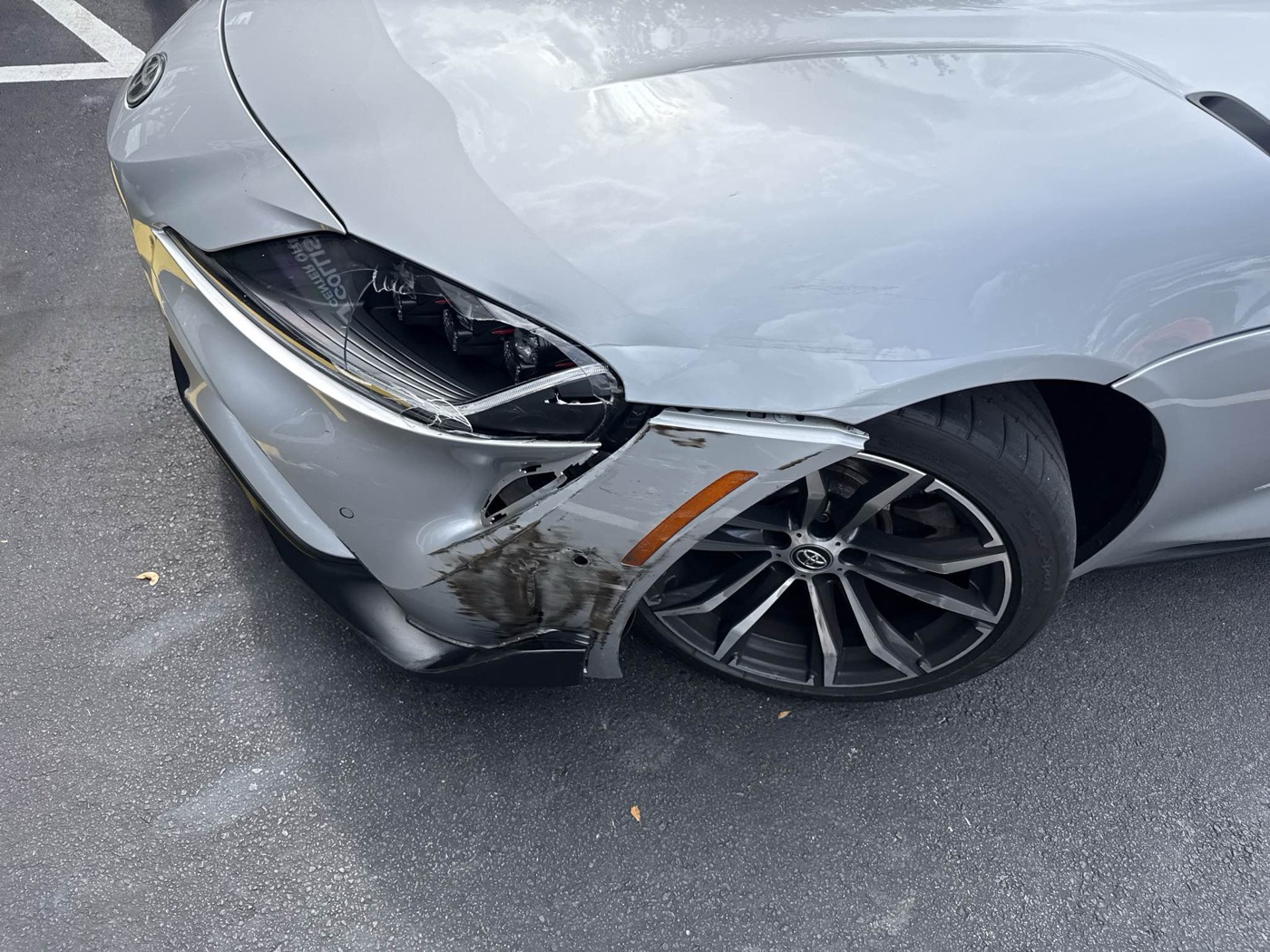
The most common signs of frame damage after an accident are uneven panel gaps, doors or a trunk that no longer close flush, the car pulling to one side, unusual tire wear, and new creaks or rattles over bumps. These clues point to structural damage you cannot confirm by eye alone — only by measuring the body against factory specifications.
Structural vs. Body Damage: Why the Difference Matters
Not all collision damage is equal. A crushed fender is cosmetic. A shifted rail or a tweaked pillar is structural, and structure is what protects you in the next crash.
Most vehicles on the road today are unibody — the body and frame are one welded shell engineered with crumple zones that absorb and redirect impact force. Larger trucks and some SUVs use body-on-frame construction, where the body bolts onto a separate ladder frame. Either way, a hard hit sends energy through parts you never see, and small shifts there change how the vehicle drives and how it performs on impact.
That is why “it looks fine” is not the same as “it is fine.” Sheet metal can be straightened while the structure underneath sits out of spec.
The Warning Signs of Frame Damage After an Accident
After a collision, watch for the symptoms below. One alone may have another cause; several together are a strong reason to have the structure measured before you keep driving.
| Warning sign | What it may indicate |
|---|---|
| Uneven panel gaps or misaligned body lines | The shell has shifted, so panels no longer sit where they were built to |
| Doors, hood, or trunk that won’t close flush | Openings have moved out of square from structural distortion |
| Car pulls or drifts to one side on a straight, level road | Suspension mounting points or the frame geometry are off |
| Uneven or accelerated tire wear | Wheel alignment angles have changed because the structure moved |
| Steering wheel off-center when driving straight | Alignment or structural reference points are no longer true |
| New squeaks, creaks, or clunks over bumps | Stressed welds, loose structural joints, or shifted components |
| Visible kinks, folds, or ripples in rails or floor pans | Direct structural deformation from the impact |
Some of these overlap with a simple wheel alignment issue, which is why a straightforward first step is to have the alignment angles checked against factory settings. If the vehicle can’t hold an alignment, that itself is a signal the structure may have moved.
Why You Cannot Eyeball a Bent Frame
A frame can be pushed out of spec by a few millimeters and still look normal in a parking lot. But a few millimeters at a mounting point becomes a noticeable pull at highway speed and measurable tire wear over the following weeks.
Modern vehicles are built from a mix of high-strength steels, aluminum, and bonded components, and each reacts to force differently. That engineering is also what makes a visual guess unreliable — the metal you can see may spring back while a hidden reinforcement stays deformed. Restoring the vehicle correctly is the whole point of proper structural and frame repair: bringing the body back to where the manufacturer built it, confirmed with real numbers.
What a Proper Structural Inspection Includes
A credible inspection does not stop at a walk-around. Here is what a thorough structural evaluation should involve:
- A full visual and hands-on assessment, including disassembly where needed to reach hidden damage.
- Anchoring the vehicle on a frame bench or measuring system so it can’t shift during the check.
- Computerized measuring that maps the body in three dimensions and compares it to the manufacturer’s factory reference points.
- Identifying which components moved, which can be straightened, and which must be replaced or sectioned according to the automaker’s procedures.
- Checking suspension and steering mounting points, since these drive alignment and handling.
- Re-measuring after any corrective work to confirm the structure falls within OEM tolerances.
- Documenting the results so the repair is verifiable, not just visually finished.
This is also where safety systems come back into the picture. Structural work, alignment changes, and panel work near cameras or radar can knock driver-assist sensors out of spec, so many vehicles need the driver-assist sensors recalibrated before they leave. If you want the detail, our guide on what ADAS calibration involves walks through why a sensor that “looks fine” can still be aimed wrong.
After a Claim: Your Right to a Correct Repair
Structural repair often runs through an insurance claim, and Florida drivers have protections worth knowing. Under Florida Statute 626.9743(3), an insurer that elects to repair a vehicle and requires a particular repair shop “shall cause the damaged vehicle to be restored to its physical condition as to performance and appearance immediately prior to the loss at no additional cost to the insured or third-party claimant other than as stated in the policy.”
For structural damage, “restored to its physical condition as to performance” is the line that matters. A frame straightened only until it looks right, but not measured back to factory spec, has not been restored in performance. Following the automaker’s published structural procedures is how a repair keeps your vehicle’s crash behavior intact and helps protect your factory warranty — and it starts with an honest, measured assessment rather than a guess.
If you’re weighing a full repair plan, our collision repair overview explains how structural, body, and paint work fit together into one OEM-correct process.
Get It Measured in Orlando
If your vehicle took a real hit anywhere around Orlando and you’re seeing any of the signs above, don’t wait for the symptoms to get worse. We’ll anchor it, measure it against factory specifications, and give you a documented, honest plan. Call (321) 972-1549 or start your estimate and we’ll tell you exactly where your car stands.