
After a collision, a Ford can look repaired while hidden structural damage, paint issues, or uncalibrated safety systems remain. Choosing a shop that follows manufacturer-approved procedures helps protect the vehicle’s safety, warranty coverage, and resale value.
Ford Body Shop Repair Orlando should include a complete damage evaluation, Ford-relevant repair procedures, structural and panel work, refinishing, and a final safety inspection. Ask how the shop documents OE specifications, handles advanced driver assistance systems, and verifies the repair before returning your vehicle.
For Orlando drivers, the right choice is not simply the nearest facility or the one an insurer suggests. It is a repair partner with the equipment, technical process, and customer advocacy needed for your Ford’s specific damage. That starts with understanding what full-service collision repair should cover, from the first inspection through paint and safety checks.
What a Full-Service Ford Body Shop in Orlando Does
A full-service shop handles more than the visible dent or scraped bumper after a crash. The work begins with a comprehensive damage evaluation that considers the vehicle’s exterior, underlying structure, safety systems, and repair requirements. For a Ford owner in Orlando, that evaluation should guide a repair plan based on OE procedures rather than a quick cosmetic fix. Collision Center Orlando combines that process with customer advocacy, helping keep the focus on safe, complete restoration.
That may include everything from a minor parking-lot dent to extensive collision damage. The goal is to restore the vehicle as closely as practical to its pre-accident condition while documenting the work and checking the systems that matter after the body panels look finished.
Collision, panel, and structural repair
Collision repair can involve replacing or repairing damaged bumpers, fenders, doors, quarter panels, hoods, and other body components. Technicians assess whether a panel can be repaired, needs replacement, or requires additional alignment work. Small dents may be candidates for paintless dent repair when the paint surface and panel access make that approach appropriate. More involved damage may require conventional panel repair, refinishing, or replacement.
When impact forces travel beyond the outer panels, the repair must address the vehicle’s structure. A shop performing frame and structural repair uses specialized equipment to measure and restore damaged areas according to the repair plan. This is not simply a matter of making gaps look even. Structural alignment can affect how the vehicle performs in a future collision, so it belongs in the initial evaluation and the final safety review.
Paint matching and refinishing
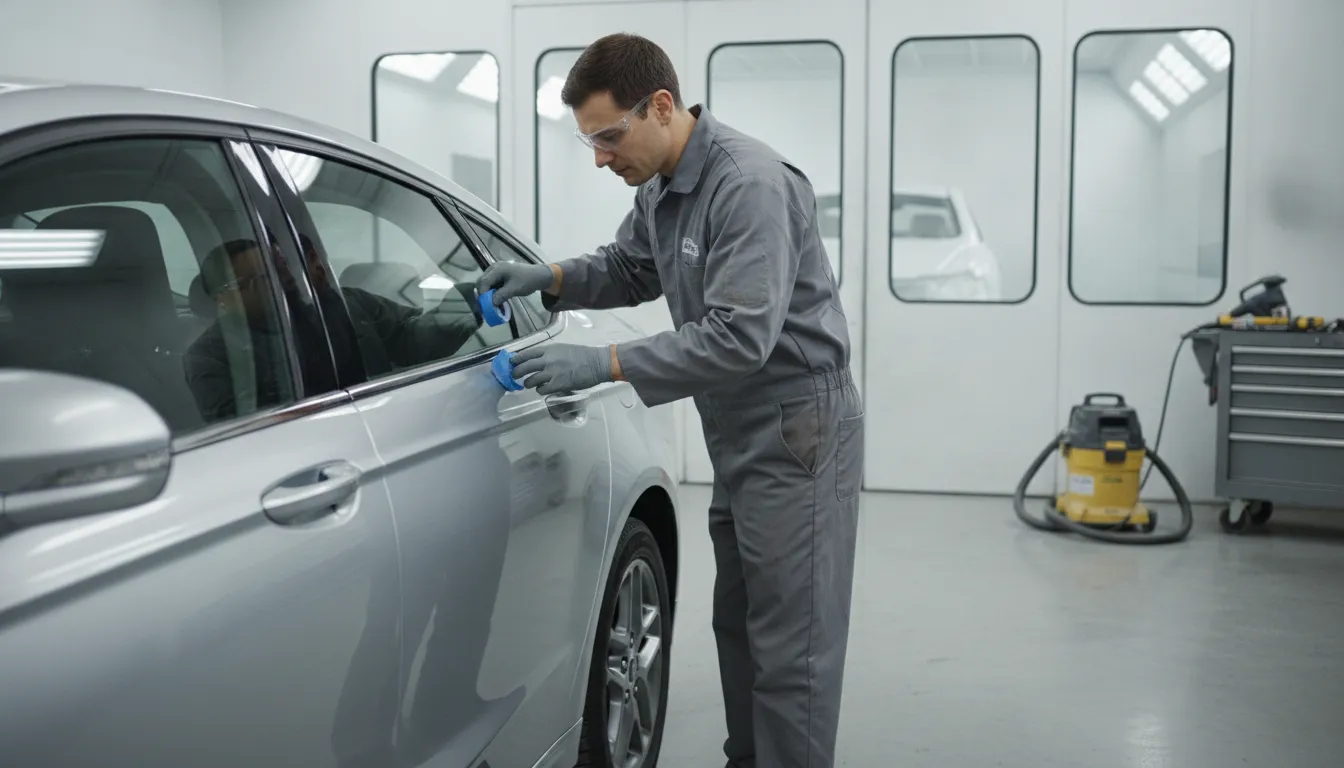
After panel or structural work, refinishing restores the appearance and protects repaired surfaces. Professional auto painting involves preparing the panel, matching the vehicle’s finish, applying compatible coatings, and blending the repair so the result looks consistent with adjacent panels. A controlled paint booth helps support a clean, even finish and reduces the risk that dust or other contaminants will affect the work.
Refinishing is also part of quality control. A color mismatch, uneven texture, or visible blend line can signal that the repair was rushed. A full-service process gives the shop room to address both the underlying repair and the visible finish instead of treating paint as an afterthought.
Safety inspections, technology, and claim assistance
Modern Ford vehicles may include cameras, sensors, and other advanced driver assistance features near areas affected by a collision. Collision Center Orlando’s facility includes structural repair equipment and ADAS calibration tools, along with a state-of-the-art paint booth. Those resources support the technical work needed after impact, but equipment alone is not enough. The repair plan must identify which systems require attention, follow the applicable OE procedures, and include a multi-point safety inspection before delivery.
A full-service shop can also assist with the administrative side of an insurance claim by documenting damage, communicating repair information, and helping the owner understand the recommended work. That support does not replace the owner’s decision about where to repair the vehicle. It gives Orlando-area Ford drivers a clearer path from the first estimate through collision repair, refinishing, structural work, and final inspection.
Why Certified Ford Body Shop Repair in Orlando Matters for Safety and Resale
A Ford can look repaired while still carrying problems that are not visible from the curb. A collision can affect mounting points, sensors, restraint systems, panel alignment, corrosion protection, or the way energy moves through the vehicle during another impact. That is why manufacturer-approved repair procedures matter. They give technicians a defined process for returning the vehicle to its pre-accident condition instead of relying on appearance alone.
Manufacturer-approved procedures also support the goals most Ford owners care about after a collision: safe operation, warranty coverage, and retained resale value. A repair facility should be able to explain which procedures apply to your model and which inspections or calibrations are required. You can review the shop’s OEM certifications and ask how those standards will be applied to your vehicle.
Safety depends on more than a straight panel
Modern Fords may combine structural components with cameras, radar, electronic controls, airbags, seat-belt pretensioners, and other safety features. If a bumper, grille, windshield area, suspension mounting point, or body panel is repaired without accounting for those systems, the vehicle may not respond as its designers intended. Consumer guidance from the State of Michigan puts the principle plainly: your vehicle’s safety features must be properly repaired to function as intended. That guidance is not a substitute for Ford-specific procedures. It explains why a cosmetic finish is not the same as a complete repair.
OE specifications help preserve the vehicle’s safety and structural integrity as designed by the manufacturer. In practice, that means repair planning should account for approved joining methods, measurements. Replacement requirements, corrosion protection, and system checks rather than treating every Ford as a generic vehicle. A thorough evaluation may uncover damage behind exterior panels that an initial visual inspection cannot identify.
Vehicle technology makes current repair information essential
Repair knowledge has to keep pace with the vehicle itself. The U.S. Government Accountability Office notes that, as vehicle technologies evolve, information about those technologies becomes increasingly important for vehicle repair. The GAO report reinforces why a shop should work from current manufacturer information instead of memory or a one-size-fits-all shortcut.
That consideration is especially important when a Ford has advanced driver-assistance features or sensors near a damaged area. The repair plan may need to include more than panel replacement and paint. Technicians should identify affected systems, follow the applicable OE procedure, and confirm that the completed repair meets the vehicle’s requirements. Asking these questions before authorizing work can help you understand what is being repaired and why.
Fit, finish, warranty, and resale value are connected
Correct fit and finish are not merely cosmetic benefits. Consistent gaps, proper panel positioning, and an accurate paint match help protect against water intrusion, premature corrosion, wind noise, and visible evidence of an incomplete repair. More importantly, using manufacturer-approved procedures creates a stronger foundation for preserving warranty coverage and documenting the vehicle’s condition for a future buyer.
Records matter when you sell or trade a Ford. A documented repair that identifies the damage, the procedures followed. And the inspections completed gives the next owner more useful information than a vague statement that the vehicle was “fixed.” In Orlando’s used-vehicle market. Transparent documentation and professional workmanship can help protect the investment you made in the vehicle. The right repair decision is therefore about more than getting back on the road today. It is about restoring the Ford carefully enough that safety, function, appearance, and long-term value all remain part of the outcome.
OEM Ford Parts vs. Aftermarket Parts After a Collision
After a collision, the visible damage is only one part of the repair decision. A replacement bumper, fender, hood, grille, sensor bracket, or structural component must fit the vehicle and work within the repair plan for the surrounding systems. The central question is not simply whether a part looks similar. It is whether the part and installation method support the Ford’s design specifications, safety systems, finish, and long-term value.
OEM parts are made for the vehicle manufacturer and selected for a particular model, trim, and application. Aftermarket or generic parts may be available as alternatives, but their suitability can vary by supplier, component, and vehicle. An estimate that lists an alternative part should therefore be reviewed in the context of the entire repair, not evaluated on price alone. Collision Center Orlando’s repair approach emphasizes manufacturer-approved procedures and OE specifications rather than insurance-driven cost cutting. Those procedures help guide how a damaged Ford is measured, repaired, refinished, inspected, and returned to the owner.
| Consideration | OEM Ford part | Aftermarket or generic part |
|---|---|---|
| Vehicle application | Designed for the relevant Ford model and intended application. | May be listed as a compatible alternative, but fit and application should be confirmed for the specific vehicle. |
| Fit and finish | Supports the original design lines, mounting points, and finish requirements. | May require closer review for alignment, mounting, surface preparation, and finish consistency. |
| Repair procedures | Can be evaluated within Ford’s applicable specifications and repair information. | Requires the repairer to verify compatibility with the vehicle’s procedures and adjacent components. |
| Safety and technology | Helps the repair plan remain aligned with the vehicle’s designed systems when installed correctly. | Should be reviewed for its effect on sensors, restraint systems, attachment points, and required calibration. |
| Owner decision | Provides a clear OE-based option for the estimate and repair plan. | May be considered only after discussing the specific component, source, fit, warranty implications, and repair requirements. |
Why specifications matter beyond appearance
OE specifications help maintain vehicle safety and structural integrity as designed by the manufacturer. That matters when a collision affects more than an outer panel. The part may interact with crash-management components, lamps, sensors, brackets, or systems that require a defined position. A replacement that appears acceptable in the parking lot can still create problems if its mounting, material, or dimensions do not support the repair plan.
Safety technology makes this review even more important. The Government Accountability Office has noted that, as vehicle technologies evolve, information about those technologies becomes increasingly important for vehicle repair: GAO repair-information findings. A body shop needs access to relevant manufacturer information and the technical ability to apply it. That can include identifying affected components, following specified procedures, and determining whether inspection or calibration is required after the physical repair.
The right choice can also affect finish and ownership experience. A panel that aligns correctly supports consistent gaps and paint preparation. A properly planned repair helps preserve the vehicle’s condition and value, while manufacturer-approved procedures are intended to support safety, warranty coverage, and resale value. If an estimate proposes aftermarket parts for a Ford, ask which components are being substituted. Why, and how the shop will verify fit, finish, system compatibility, and any required post-repair inspection. A transparent explanation is more useful than a blanket promise that every alternative is equivalent.
For a closer look at the facility’s manufacturer-related repair standards, review the OEM certifications information, then discuss the part list with the repair team before work begins.
How to Choose a Trusted Ford Body Shop in Orlando
Choosing a repair facility after a collision is an important decision, especially when your Ford includes cameras. Sensors, driver-assistance features, and structural components that must be restored according to the vehicle manufacturer’s procedures. The shop you select should be able to explain its repair standards clearly, document the work, and put safety ahead of shortcuts.
Start by remembering that the insurance company does not have to choose the shop for you. Consumer guidance published through Cornell Law School states that consumers have the right to select their own auto body repair shop. You can ask questions, compare facilities, and choose the team you trust to protect your Ford.
Confirm OEM knowledge, procedures, and certifications
Ask whether the shop follows Ford or other manufacturer-approved repair procedures for your specific model. A trustworthy facility should be able to discuss how it researches repair information, handles structural measurements, selects replacement components, and documents safety checks. Do not settle for a vague answer such as “we repair all makes.” Ask what the technicians will do when the repair involves a Ford-specific system or procedure.
Also review the shop’s OEM certifications and technician qualifications. Recognized technician certifications are one indicator that a repair team follows professional standards. Certifications do not replace a detailed estimate or a conversation about your vehicle. But they can help you distinguish a facility with documented training from one that relies only on general experience.
Ask how ADAS calibration and safety inspections are handled
Modern Fords may use cameras, radar, and other sensors for features such as lane assistance, collision warnings, or automatic braking. After body or structural damage, those systems may require inspection, aiming, or calibration. Ask whether the shop has the equipment and procedures needed to evaluate ADAS after repairs, and ask how calibration results will be recorded.
The Government Accountability Office notes that as vehicle technologies evolve, information about those technologies becomes increasingly important for vehicle repair. Similarly, Michigan consumer guidance warns that a vehicle’s safety features must be properly repaired to function as intended. A reliable shop should take these systems seriously rather than treating visible cosmetic damage as the entire repair.
Read reviews and evaluate the customer experience
Reviews can reveal patterns that an advertisement will not. Look for comments about communication, estimate clarity, repair updates, workmanship, cleanliness, and how the shop handled questions. Give more weight to detailed, recent reviews than to a star rating alone. You can also ask whether the shop will explain changes to the repair plan before proceeding.
Insurance claim assistance is another practical consideration. Ask whether the facility can help organize claim documentation, communicate with the insurer, and explain differences between the recommended repair and an insurance cost estimate. A customer-focused shop should advocate for proper repair without promising an insurer outcome it cannot control.
Verify warranty handling before authorizing repairs
Ask what warranty applies to the repair, what it covers, and how warranty concerns are handled after delivery. Manufacturer-approved procedures are intended to support safety, warranty coverage, and vehicle value, but the details can vary by repair and component. Request the warranty terms in writing and keep your estimate, repair order, parts information, and calibration records.
- Confirm the shop’s OEM or manufacturer certification information and ask what it means for your Ford.
- Ask which Ford repair procedures will guide structural, body, paint, and safety-system work.
- Verify that ADAS inspection or calibration is addressed when the damage could affect sensors or cameras.
- Read detailed reviews for communication, workmanship, and claim support.
- Ask for written warranty terms and copies of your completed repair documentation.
- Choose a facility that can explain the work without pressuring you to accept insurance-driven cost cutting.
For Greater Orlando owners, Collision Center Orlando serves customers from 6958 Venture Circle, Orlando, FL 32807. A local conversation about your Ford’s damage, repair procedures, safety systems, and documentation can help you make a confident decision before work begins.
What to Expect From the Collision Repair Process for Your Ford
- Estimate and initial inspection. The process begins with a careful review of the visible damage, the accident circumstances, and your Ford’s condition. A professional estimator documents the affected areas, identifies safety concerns, and prepares an estimate for the work that may be required. Some damage is not visible from the outside, so the initial estimate may be refined after the vehicle is disassembled. This evaluation creates a practical repair plan rather than relying only on a quick visual guess.
- Insurance claim coordination. The shop can help organize the information needed for your insurance claim, explain the repair plan, and communicate about documented damage. You remain the vehicle owner’s decision-maker throughout the process. Clear communication at this stage helps separate the insurer’s estimate from the repairs needed to restore the Ford properly, including items discovered during a more complete inspection.
- Disassembly and complete damage assessment. Technicians remove damaged exterior components and inspect the areas beneath them. This can reveal bent supports, hidden impact damage, damaged mounts, wiring concerns, or other issues that could affect safe operation. The repair plan is updated when necessary, and any additional work is documented before it proceeds.
- Structural and panel repair. If the collision affected the vehicle’s structure, technicians use appropriate measuring and repair equipment to restore it according to applicable OE procedures. Damaged panels may be repaired or replaced based on their condition and the repair requirements. The goal is more than making the outside look straight. Correct structural and panel work supports proper fit, operation, and occupant protection. You can learn more about structural and frame repair.
- Paint and refinishing. Once body repairs are complete, the repaired surfaces are prepared for refinishing. Color matching, surface preparation, primer, paint, and clear coat all contribute to a consistent finish. A controlled paint environment and careful blending help the repaired area look appropriate beside the original Ford finish. More details are available on the shop’s auto painting service page.
- Reassembly and system checks. Technicians reinstall the repaired or replaced components, including trim, lights, bumpers, grilles, sensors, and other parts removed during the repair. They check panel gaps, latches, lighting, and related functions. Reassembly is not simply the reverse of disassembly. Each component must be secured and positioned correctly so the vehicle operates as intended.
- ADAS calibration when required. Many Ford models use driver-assistance technology that depends on cameras, radar, or other sensors. A collision, replacement part, or change in alignment can affect these systems. When the repair requires it, the shop evaluates and performs the appropriate ADAS calibration using the vehicle’s repair requirements. This step is important because electronic safety features need accurate setup to function as intended.
- Multi-point safety inspection. Before delivery, the repaired vehicle receives a comprehensive review. Collision Center Orlando describes its process as including comprehensive damage evaluation, execution of OE procedures, and multi-point safety inspections. The inspection helps confirm that the repaired areas, safety-related systems, lights, wheels, panels, and other relevant components have been addressed instead of stopping at cosmetic appearance.
- Final detailing and delivery. The final stage includes cleaning the vehicle, reviewing the completed work, and discussing any relevant repair documentation with you. The team should explain what was repaired and identify any follow-up instructions before handing back the keys. A thorough delivery review gives you an opportunity to ask questions and leave with a clear understanding of the work performed on your Ford.
Ready to Book Your Ford Repair Estimate?
A careful estimate can help you understand the damage, plan the repair, and choose a path that supports your Ford’s safety and value. Collision Center Orlando can review your vehicle and explain the next steps in clear, practical terms.