


A child car seat after an accident deserves its own safety check, even when the seat looks normal. Crash forces can affect a restraint in ways that are not obvious from the outside. Parents should document the collision, review the National Highway Traffic Safety Administration guidance, follow the seat manufacturer’s instructions, and have the vehicle assessed before making assumptions about the next trip.
Should you replace a child car seat after an accident?
NHTSA recommends replacing a child car seat after a moderate or severe crash. A seat may not need automatic replacement after a minor crash only when every NHTSA minor-crash condition is met, but the manufacturer’s instructions still control. When any condition is unknown, or the seat shows damage, stop using it until you receive guidance.
NHTSA says a minor crash must meet all of these conditions:
- The vehicle could be driven away from the crash site.
- The door closest to the child seat was not damaged.
- No passenger was injured.
- No airbag deployed, if the vehicle has airbags.
- The child seat has no visible damage.
Read the complete NHTSA guidance on car seat use after a crash and compare the facts of the collision with the manufacturer’s instructions. A parent should not treat this list as a substitute for the seat manual or a professional safety consultation.
What should parents do immediately after the crash?
After a crash, protect people first and preserve information second. Move away from immediate hazards when it is safe to do so, follow emergency instructions, and seek medical attention for injuries. Do not put a child back into a restraint that may have been involved in a moderate or severe collision while you are still trying to determine what happened.
Use this short documentation checklist:
- Write down the date, time, location, and a brief description of the collision.
- Photograph the vehicle from several angles, including the side nearest the car seat.
- Photograph the child seat in place and any visible marks, cracks, broken parts, or loose components.
- Record whether the vehicle could be driven, whether the nearest door was damaged, whether airbags deployed, and whether anyone was injured.
- Save the seat manual, registration information, purchase record if available, and photographs of the model and serial labels.
- Contact the seat manufacturer and ask what information it needs to evaluate the restraint.
This information helps the manufacturer and the collision repair team understand the event. It also reduces the risk of relying on memory later, when the details of the crash may be harder to reconstruct.
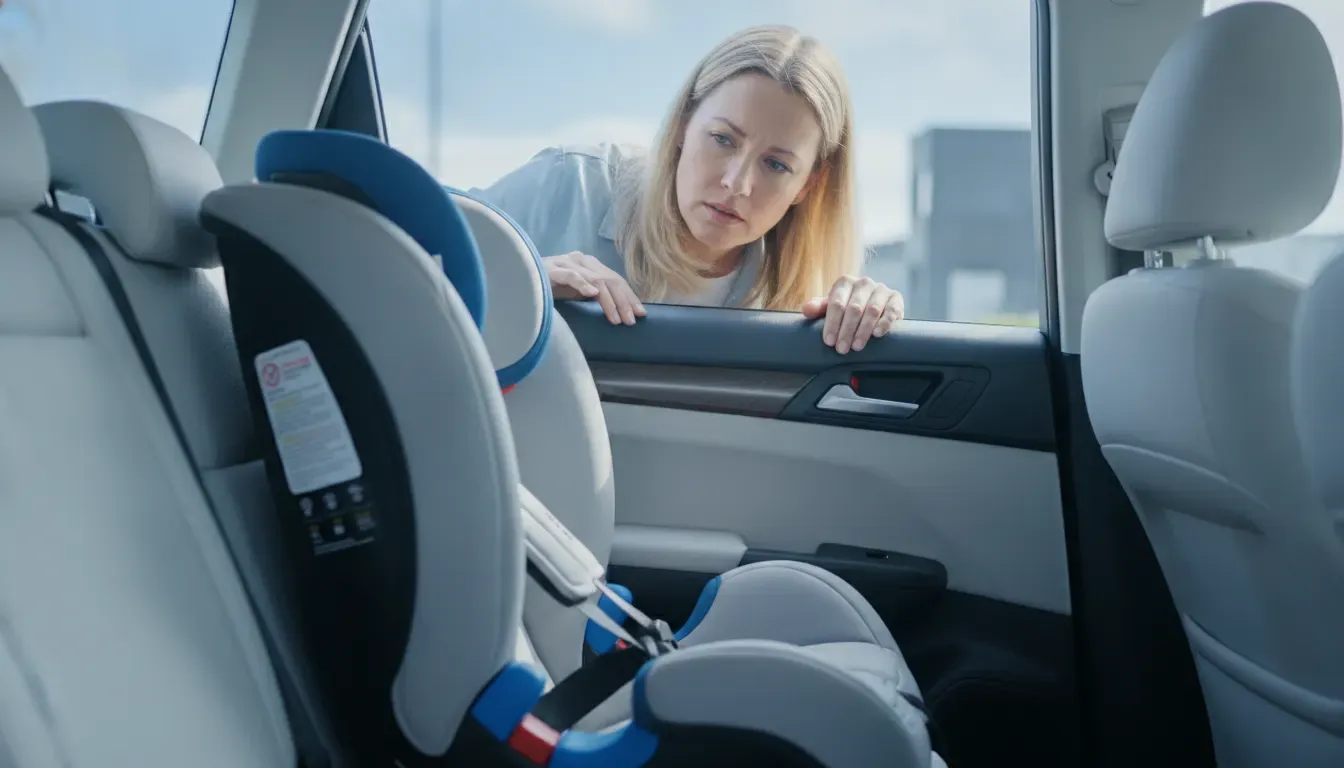
How can you tell whether the crash was minor?
The word minor can be misleading after a collision. NHTSA’s guidance uses a specific five-part checklist, not a driver’s first impression or the size of a dent. If even one condition is not met, the crash does not fit that minor-crash definition. For example, an airbag deployment, an injury, damage to the adjacent door, or visible seat damage changes the evaluation.
| Question | Why it matters | What to do next |
|---|---|---|
| Could the vehicle be driven away? | It is one of NHTSA’s minor-crash conditions, but it does not independently clear the seat. | Record the vehicle’s condition and have collision damage assessed. |
| Was the door beside the seat damaged? | Damage near the restraint changes the crash context. | Photograph the door, surrounding structure, and seat position. |
| Did an airbag deploy? | NHTSA’s minor-crash criteria require that airbags did not deploy. | Do not assume the restraint is reusable. Ask the manufacturer for direction. |
| Was anyone injured? | An injury means the event does not meet every minor-crash condition. | Prioritize medical care and do not reuse a seat after a moderate or severe crash. |
| Does the seat show visible damage? | Cracks, broken parts, or altered structure are warning signs. | Stop using it and contact the manufacturer about replacement. |
A vehicle can appear drivable while still needing a thorough inspection. Collision Center Orlando’s collision repair service addresses the vehicle’s damage and repair needs. The shop cannot certify a child restraint for reuse, so the seat manufacturer remains the authority for that decision.
What does Florida law say about child restraints?
Florida’s child-restraint law and post-crash seat guidance answer different questions. The law addresses how children must be restrained while riding in a motor vehicle. NHTSA guidance addresses whether a child seat involved in a crash should continue to be used. Meeting Florida’s minimum legal requirement does not by itself prove that a crash-involved seat is undamaged or appropriate for reuse.
Under Florida Statutes section 316.613, a child age 5 or younger must be protected with a properly used, crash-tested, federally approved child restraint device. The statute describes separate-carrier or integrated-seat requirements for children through age 3 and allows a separate carrier, integrated child seat, or booster seat for children ages 4 through 5, subject to the law’s terms and exceptions.
Parents should check the current statute and the Florida Department of Highway Safety and Motor Vehicles guidance for details. For everyday use, the restraint should fit the child’s size and developmental needs, be installed according to both manuals, and be used every trip. For a seat involved in a collision, manufacturer instructions and the crash facts are still essential.
What else should you inspect before using the seat again?
Crash involvement is the first question, but it is not the only one. A seat can also be affected by age, a recall, missing parts, or installation in a different vehicle. The American Academy of Pediatrics explains that choosing a seat depends on a child’s age, size, and developmental needs, and recommends reading both the vehicle owner’s manual and the car seat manual during installation.
- Recall status: Search the seat brand and model through NHTSA’s recall database.
- Expiration and service life: Check the label and manual for the manufacturer’s stated service-life information.
- Parts and labels: Confirm that the harness, buckle, padding, base, and labels are present and in the condition described by the manufacturer.
- Installation: Reinstall only according to the seat and vehicle manuals. Do not improvise with unapproved accessories or replacement parts.
- Child fit: Make sure the seat type and harness position match the child’s current size and developmental stage.
- Professional help: Ask a certified child passenger safety technician to review installation when you are uncertain.
These checks do not override post-crash instructions. They are additional safeguards for a seat that the manufacturer has determined may continue to be used.
How does the vehicle inspection fit into child passenger safety?
A child seat cannot be evaluated in isolation from the crash. Vehicle damage near the seating position, door, roof, floor, seat mounts, belts, airbags, or sensors may change the safety picture. A collision repair inspection can document vehicle damage and identify repair needs, while the car seat manufacturer evaluates the restraint itself. These roles work together but are not interchangeable.
Tell the collision repair shop that a child restraint was installed in the vehicle and where it was located. Share photographs and the five NHTSA minor-crash facts. Mention any airbag deployment, door impact, injury, or visible seat damage. Also tell the shop if the vehicle has warning lights or if a seat belt, airbag, or sensor system appears different after the crash.
For vehicles with driver-assistance equipment, a collision repair plan may also involve a review of systems that support safe operation. Collision Center Orlando provides ADAS calibration services for applicable repair situations. That work is about the vehicle’s driver-assistance systems, not a certification of the child restraint. Keeping the distinction clear helps parents ask the right expert each question.
What should you ask the car seat manufacturer?
Have the facts ready before contacting the manufacturer. A clear, complete question is more useful than a general request to know whether the seat is safe. Keep the manufacturer response with your crash photographs and vehicle repair records.
- Does this model require replacement after the type of crash that occurred?
- What model, serial, and manufacture-date information do you need?
- Do you need photographs of the seat, vehicle, door, or airbag deployment?
- Are replacement parts allowed, and how must they be obtained?
- Does the seat have a recall or service notice?
- What should I do if the manual is missing or the label cannot be read?
Do not let a visual inspection by a parent, a friend, or a repair professional replace the manufacturer’s instructions. A seat may look intact and still require replacement under the manufacturer’s crash policy.
Frequently Asked Questions
Do car seats always need to be replaced after a crash?
No. NHTSA says a child seat does not automatically need replacement after a minor crash when all five minor-crash conditions are met. NHTSA recommends replacement after a moderate or severe crash. Always follow the specific seat manufacturer’s instructions, and ask for guidance when any crash detail is uncertain.
Can I use a car seat after a fender bender?
Do not decide based only on the phrase fender bender. Compare the collision with NHTSA’s complete minor-crash criteria, including drivability, nearby door damage, injuries, airbag deployment, and visible seat damage. Then review the manufacturer’s instructions. If any condition is unknown, pause use and ask the manufacturer.
Does Florida law require a child car seat after an accident?
Florida law requires properly used, crash-tested, federally approved child restraint protection for children age 5 or younger, subject to the statute’s specific age provisions and exceptions. That legal requirement is separate from the manufacturer’s guidance about whether a crash-involved restraint should be replaced.
Should I take the car seat to an auto body shop?
An auto body shop can inspect the vehicle and document collision damage, but the car seat manufacturer should determine whether the child restraint may be reused. Tell the shop where the seat was installed and share crash details so the vehicle inspection considers the seating position and related safety systems.
What should I do with a car seat that needs replacement?
Follow the manufacturer’s disposal or replacement instructions. Do not give away or donate a restraint that has been involved in a moderate or severe crash, has visible damage, is recalled, or has missing parts. If the manufacturer says a seat must not be reused, make it unusable before disposal according to local guidance.