

Car collision safety is not limited to whether a vehicle looks repaired from the outside. After a crash, the vehicle’s structure, restraint systems and advanced driver assistance systems (ADAS) each have a different job, and they must work together as intended. Understanding those layers can help Orlando drivers ask better questions before repair decisions are finalized.
What does car collision safety include after a crash?
Car collision safety after a crash means evaluating the parts and systems designed to manage impact energy, protect occupants and support the driver’s awareness. That includes structural components, seat belts, airbags, sensors, cameras and the manufacturer-specific procedures used to repair or verify them.
A useful way to think about the vehicle is as three connected layers:
| Safety layer | Primary role | Post-crash question |
|---|---|---|
| Vehicle structure | Manage crash energy and maintain the occupant compartment | Was the structure measured and repaired to the correct factory dimensions? |
| Restraint systems | Help position and protect occupants during a collision | Were seat belts, pretensioners, airbags and related warning systems evaluated? |
| ADAS | Provide alerts or assistance using cameras, radar and other sensors | Were affected sensors checked and calibrated according to the vehicle maker’s procedures? |
These layers are related but not interchangeable. A vehicle can have a straight-looking body panel while needing structural evaluation. A warning light can point to a restraint or sensor concern even when the exterior damage appears minor. A collision repair plan should account for the complete vehicle, not only the most visible part.
How does vehicle structure affect collision safety?
Vehicle structure affects collision safety by helping manage impact forces and preserving the space around the occupants. Depending on the vehicle, that structure can include rails, reinforcements, pillars, rocker panels, crossmembers and other parts of a unibody or body-on-frame design. Damage to one area can change how other components align or carry loads.
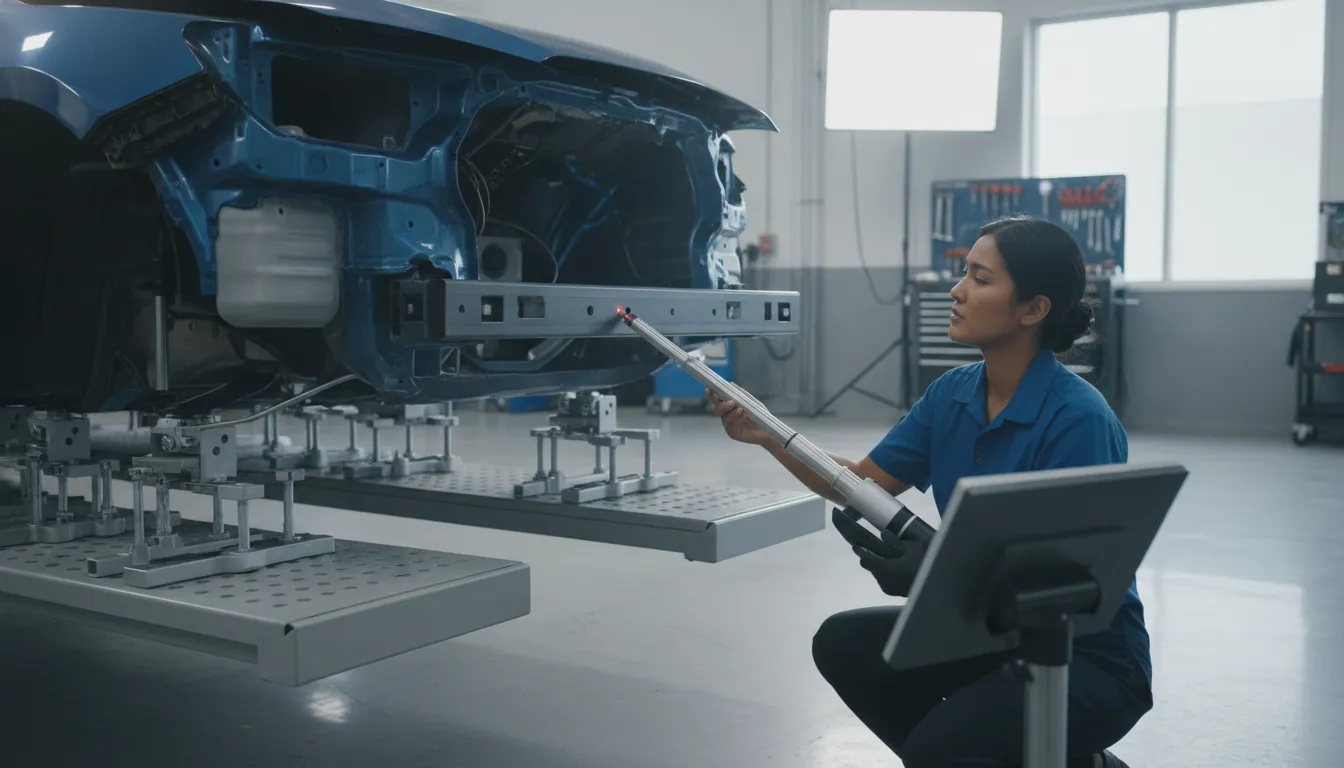
Structural measurements help a collision repair team understand alignment beyond visible body damage.
Modern vehicles are engineered with areas that deform in a crash and stronger areas intended to help maintain the occupant compartment. That does not mean every bent or replaced part has the same significance. The repair method, material, attachment method and measurement reference can vary by make and model.
For that reason, structural work should follow the applicable manufacturer repair information. Measurements, sectioning decisions, replacement parts and joining methods can affect the way the vehicle performs in a later collision. Collision Center Orlando describes its structural and frame repair service as part of its collision repair work in Orlando.
Drivers do not need to diagnose structural damage themselves. A better question is whether the repair plan includes the right structural evaluation and whether the shop can explain what was checked. If you want background on integrated vehicle construction, read the guide to what a unibody car is.
What role do seat belts and airbags play in collision safety?
Seat belts and airbags are restraint systems, and they are designed to work together. Seat belts help position occupants and manage movement, while airbags provide supplemental protection in qualifying crash conditions. The National Highway Traffic Safety Administration explains that airbags do not replace seat belts and that a deployed airbag cannot be reused.
After a crash, restraint-related questions can include more than whether an airbag opened. A repair team may need to consider the seat belt webbing and hardware, pretensioners, load limiters, airbag modules, crash sensors, the supplemental restraint system controller and the warning-light circuit. The exact parts involved depend on the vehicle and the crash.
NHTSA’s airbag guidance is a useful general reference for how airbags and seat belts work together. Collision Center Orlando’s guide to what happens when airbags deploy covers deployment-related repair questions in more detail.
A restraint warning light should not be dismissed because the vehicle starts normally. Conversely, a warning light that is off does not give a driver enough information to decide that every safety component is unaffected. The appropriate next step is a professional evaluation using the vehicle’s repair information and diagnostic procedures.
Why can ADAS affect collision safety after repairs?
ADAS can affect collision safety after repairs because cameras, radar units and other sensors must detect the vehicle’s surroundings from known positions. A bumper repair, grille replacement, windshield change, suspension adjustment or structural repair can change a sensor’s mounting position or its relationship to the vehicle. The system may need diagnostic testing or calibration before the repair is complete.
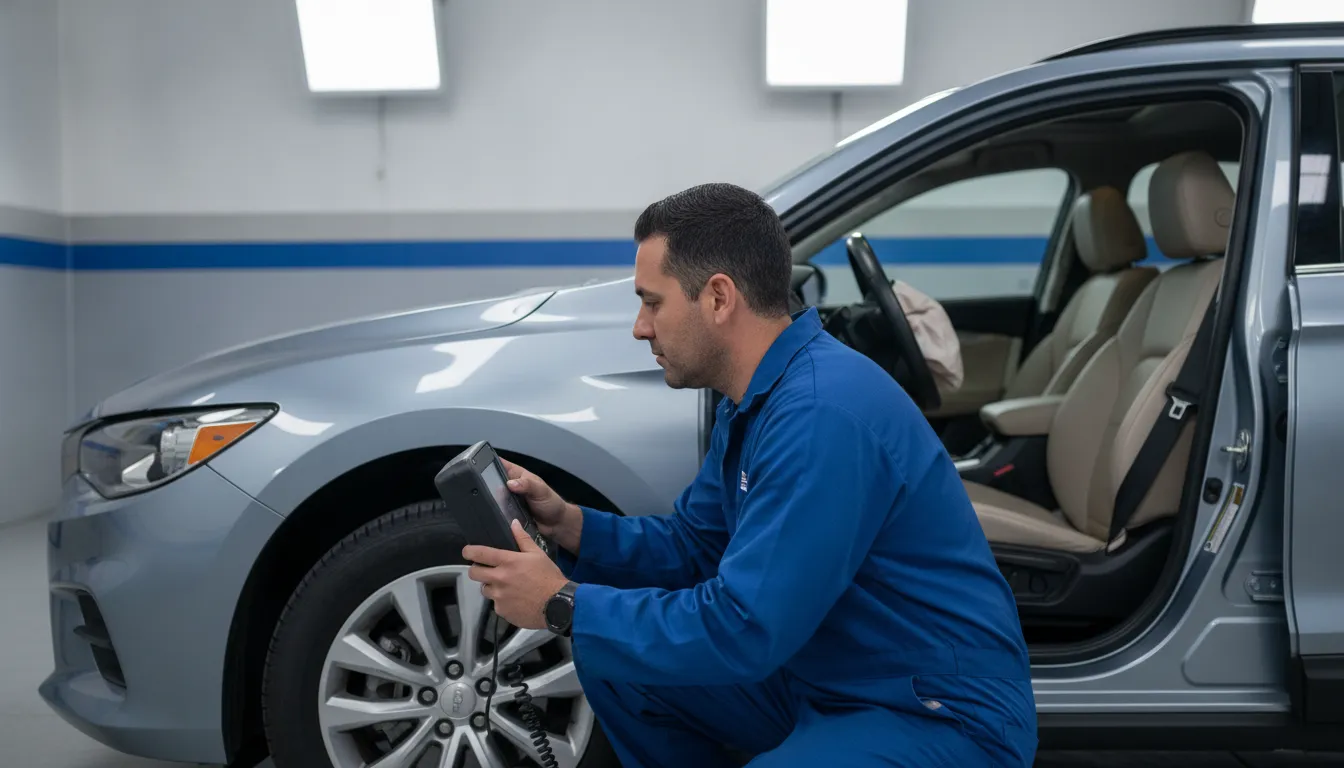
ADAS checks may be relevant when a collision affects cameras, radar or the parts that hold them in position.
Common ADAS features include forward collision warning, automatic emergency braking, lane departure or lane-keeping assistance, blind-spot monitoring and parking or rear camera functions. Not every vehicle has every feature, and the names and procedures vary by manufacturer. A make-specific warning on the dashboard, a feature that is unavailable or a change in how the system behaves should be reported to the repair team.
The Insurance Institute for Highway Safety explains that crash-avoidance features can improve safety but become more complicated to repair after crash damage or windshield replacement. Its research also shows why calibration should be treated as a technical repair step, not an optional add-on. Collision Center Orlando provides ADAS calibration services and can explain which questions apply to a particular vehicle.
Do not assume that a generic scan or a reset is the same as a completed calibration. The vehicle maker may specify a static calibration, a dynamic calibration, both, or a particular sequence after other repairs. The shop should be able to identify the affected system and explain how it was checked.
What should Orlando drivers ask about safety restoration?
Orlando drivers can use a short set of questions to understand whether a collision repair plan addresses more than appearance. The goal is not to perform a roadside diagnosis. It is to make sure the conversation includes the structural, restraint and electronic systems that may have been affected.
- What structural areas were evaluated? Ask whether the repair plan accounts for hidden damage, alignment and the vehicle’s applicable measurement points.
- Which restraint components were checked? Ask about seat belts, pretensioners, airbags, sensors and any supplemental restraint system warnings relevant to the crash.
- Which ADAS components may have been affected? Consider cameras, radar, parking sensors, blind-spot sensors and the brackets or panels that position them.
- What manufacturer procedures apply? Repair information can determine parts, joining methods, scan steps and calibration requirements.
- How will the completed work be verified? Ask what diagnostic checks, functional checks or calibration documentation will be part of delivery.
A clear answer may depend on the vehicle’s make, model, year, equipment and damage. A responsible shop should avoid promising a universal checklist before seeing the vehicle. Instead, it should explain which items apply to the specific repair and what information supports the recommendation.
Collision Center Orlando’s collision repair service covers the broader repair process, including structural, body and safety-related work. For a separate question about whether a damaged vehicle should be driven, use the dedicated safe-to-drive guide rather than relying on this article to make that decision.
How do structure, restraints and ADAS work together?
Structure, restraints and ADAS support different parts of the crash-safety picture. The structure helps manage impact energy, restraints help protect occupants during the event, and ADAS may help warn or assist the driver before or during certain situations. After a crash, repair decisions should consider how those systems interact instead of treating each visible symptom in isolation.
| System | What it contributes | What a repair conversation should clarify |
|---|---|---|
| Structure | Alignment and controlled management of crash forces | Applicable measurements, materials, repair methods and replacement decisions |
| Seat belts and airbags | Occupant positioning and supplemental protection | Deployment, pretensioner, sensor and warning-system evaluation |
| ADAS | Warnings or assistance based on sensor information | Sensor position, diagnostic results, calibration and feature verification |
This relationship is especially important in newer vehicles with more sensors and complex materials. A repair that looks complete from the curb may still need a technical step before the vehicle is ready for delivery. That is why manufacturer procedures, trained technicians and appropriate equipment matter when the repair involves safety systems.