

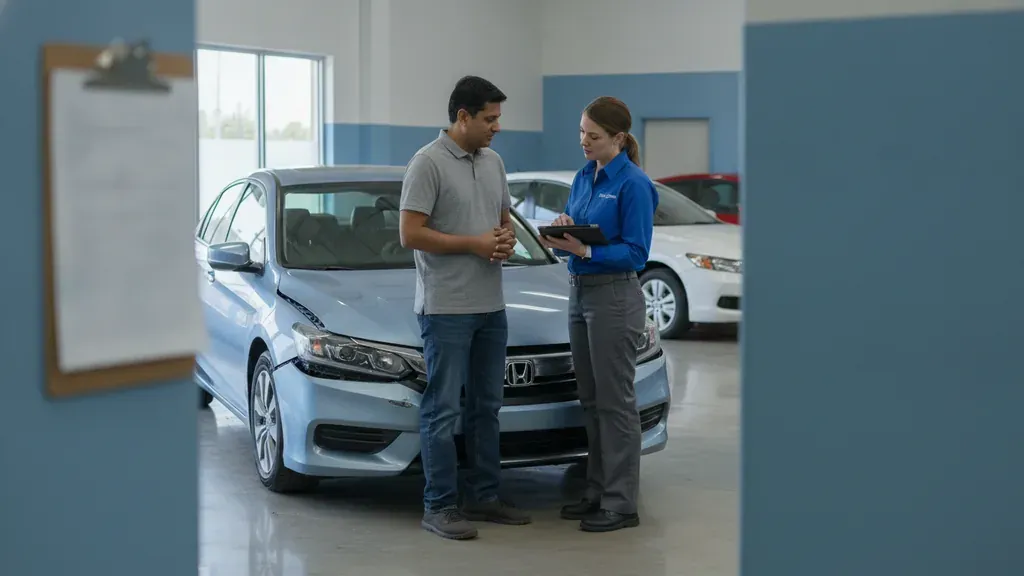
A Florida insurance appraisal clause for auto damage is a provision in an insurance policy that may offer a process for addressing a disagreement about the amount of a covered vehicle loss. It does not automatically decide whether a policy covers the loss, who caused the crash, or what a driver must do next. The exact wording of the policy controls.
If an insurer and policyholder disagree about the repair amount after a collision, the policy may describe appraisal as one possible way to value the loss. The clause may set out deadlines, appraiser requirements, umpire selection, fees, and whether the amount determined is binding. Those details can differ from one policy to another, so a vehicle owner should read the policy and get advice from a qualified insurance professional or attorney before making a legal or claim decision.
This guide explains the concept in general terms for Florida vehicle owners. It is educational information, not legal advice, an interpretation of your policy, or a prediction about coverage, payment, fault, or claim results.
What is a Florida insurance appraisal clause for auto damage?
An appraisal clause is a contract provision that can describe how the parties address a disagreement about the amount of loss. In an auto damage claim, that amount may relate to the reasonable value of covered repairs or the value of a vehicle, depending on the policy language and the type of loss. The clause is part of the insurance contract, not a replacement for the policy’s coverage terms.
Many appraisal provisions use a three-person structure. Each side selects a competent and impartial appraiser. Those appraisers try to agree on the amount of loss. If they cannot agree, they may submit the disagreement to an umpire selected under the procedure in the policy. The exact process, qualifications, timing, cost allocation, and effect of the decision are policy-specific.
A 2022 opinion from Florida’s Fifth District Court of Appeal discussed an auto insurance appraisal provision in NCI, LLC v. Progressive Select Insurance Company. The court described a policy that allowed either side to demand appraisal when the parties could not agree on the amount of loss. The opinion is a case-specific legal decision, not a substitute for reviewing your own policy. You can read the Florida Fifth District Court of Appeal opinion for its facts and analysis.
The practical point is simple: do not assume that the phrase appraisal clause means the same thing in every Florida policy. Look for the provision in the policy, read its trigger language, and ask a qualified professional what issues it may cover.
When might an appraisal clause matter after a Florida crash?
An appraisal clause may become relevant when the insurer and policyholder have exchanged enough information to identify a genuine disagreement about the amount of damage or the amount needed for a covered repair, while the policy’s appraisal conditions are satisfied. For example, a shop’s detailed estimate may include repair operations that are not included in an initial insurer estimate. Differences can arise after a vehicle is inspected more closely or disassembled and additional damage is documented.
That does not mean every difference between two estimates should go directly to appraisal. An estimate can change because hidden damage is discovered, a part becomes unavailable, a manufacturer procedure is identified, or a repair plan is clarified. A shop may document those findings in a supplement and communicate them to the insurer. Read Collision Center Orlando’s guide to the insurance supplement process for general information about documenting additional collision damage.
Appraisal questions may be more relevant when the parties continue to disagree about the amount after the damage and repair scope have been documented. The policy may require a demand in writing or may impose a time limit. Missing a notice requirement or acting before the clause is available could affect the claim, so a vehicle owner should not treat a general internet explanation as a substitute for policy review.
The clause may also be limited to first-party claims, meaning a claim under the policy held by the vehicle owner. A third-party claim against another driver’s insurer can involve different rules and contract relationships. Ask which policy is involved, who is making the claim, and whether the policy actually contains an appraisal provision that applies to the situation.
What does auto damage appraisal decide, and what does it not decide?
The central distinction is between the amount of loss and other insurance questions. An appraisal process may address the amount of a covered loss when the policy permits it. It generally is not a universal process for deciding whether the policy covers the event, whether an exclusion applies, whether a person was at fault, or whether the insurer handled every part of the claim correctly.
- Amount of loss: the dollar amount or repair value associated with the covered damage, as defined by the policy and the facts.
- Coverage: whether the policy applies to the loss, subject to policy terms, exclusions, conditions, and endorsements.
- Liability or fault: who caused the collision or is legally responsible for another person’s damage.
- Claim compliance: whether required notices, cooperation, proof of loss, examinations, or other policy conditions were completed.
Florida appellate opinions emphasize that appraisal is focused on the appraisable issue identified by the policy. In the 2022 NCI opinion, the court addressed a dispute over the amount owed for vehicle damage after coverage was not the central dispute. Another 2022 Florida appellate decision, Mendota Insurance Company v. At Home Auto Glass, discussed a policy provision involving the amount of loss and explained that the appraisal issue could include the extent of covered damage and the monetary amount needed for repair in that case.
These decisions do not mean that every Florida auto claim has the same result. They show why the policy language and the exact dispute matter. If the insurer says the damage is excluded, the accident is not covered, the loss is caused by something else, or a policy condition was not met, appraisal may not resolve that issue. A qualified attorney or licensed insurance professional can help identify the question.
How does a Florida auto damage appraisal typically work?
The following outline is a general description, not a required sequence for every policy. Your policy may use different terms, deadlines, or selection rules.
- Review the policy provision. Find the appraisal language in the policy, declarations, endorsements, or claim documents. Note what triggers appraisal, who may demand it, how the demand must be delivered, and whether mediation must occur first.
- Clarify the disputed issue. Gather the insurer estimate, repair shop estimate, photographs, inspection notes, supplement documents, and written explanations. Identify whether the remaining disagreement is about the amount of a covered loss or a different coverage, fault, or policy issue.
- Ask about the demand requirements. A policy may require a written demand, a specific address, a response period, or a notice to the insurer. Do not rely on a phone conversation if the policy requires written notice.
- Select an appraiser if the process is invoked. The clause may require each side to select a competent and impartial appraiser. Review qualifications, scope, fee terms, and conflicts before making a selection.
- Address an umpire if needed. If appraisers cannot agree, the policy may provide for an impartial umpire. The selection method and shared expenses should come from the policy or a qualified professional’s explanation.
- Keep the file organized. Preserve estimates, revised estimates, photos, repair authorizations, insurer messages, appraiser communications, and receipts. A clear record helps professionals understand what has already been inspected and discussed.
- Read the result and next-step language. A decision may be binding as to a particular amount under the policy, but the effect can depend on the clause and the dispute. Ask what the decision resolves and what issues, if any, remain.
An appraisal is not the same as asking a repair shop to revise an estimate. A shop can document repair findings and explain why an operation, part, material, scan, or calibration may be needed. The insurer evaluates the claim under the policy. If the parties still disagree, a policy-based appraisal question may arise, but the vehicle owner should confirm that with a qualified professional.
What should you review before invoking an appraisal clause?
Start with the complete policy, not only a claim email or a summary on an insurer portal. Look for words such as appraisal, amount of loss, mediation, umpire, proof of loss, notice, cooperation, and binding. Also check endorsements because they may change the standard policy language. The Florida Department of Financial Services also cautions consumers that labels such as full coverage can mean different things, which is another reason to review the actual policy terms in your file. See its personal automobile insurance overview for general consumer information.
Next, compare the documents that describe the damage. A useful file may include:
- the insurer’s initial estimate and any revised estimates;
- the repair facility’s estimate and documented supplements;
- photos of visible and hidden damage;
- diagnostic or inspection findings when they relate to the collision;
- manufacturer repair information referenced by the repair plan;
- messages that explain what the insurer accepts, disputes, or requests; and
- your policy declarations, applicable endorsements, deductible information, and claim number.
Do not assume that the largest estimate is automatically the correct amount or that a lower estimate automatically proves an insurer acted improperly. A difference can reflect a different inspection stage, parts information, labor operation, repair method, or policy limitation. Ask each professional to explain the specific line items and the reason for the difference.
Florida Statute 626.9743 addresses claim settlement practices involving motor vehicle insurance, including certain requirements related to repair estimates, parts, and claim documentation. Read the current Florida statute on motor vehicle claim settlement practices, but do not treat it as a replacement for your policy or individualized legal advice.
What questions should Florida vehicle owners ask?
Good questions can help separate a repair-documentation issue from an insurance-contract or legal issue. Consider asking:
- What exact amount or repair operation is disputed?
- Is the dispute about the amount of a covered loss, or is coverage itself disputed?
- Does my policy contain an appraisal clause that applies to this claim?
- How must a demand be delivered, and is there a deadline?
- Does the policy require mediation before appraisal?
- Who selects the appraisers and umpire, and how are their fees handled?
- What part of the decision is binding under this policy?
- Will a demand affect the repair schedule, storage, rental, or authorization process?
- What documents should I provide to support the amount of damage?
- Should I speak with a Florida attorney or licensed insurance professional before proceeding?
These questions are not a substitute for advice. They are a checklist for gathering the information needed to make an informed decision about the next conversation.
Use our online booking page for an Orlando estimate
How can a collision repair shop help with documentation?
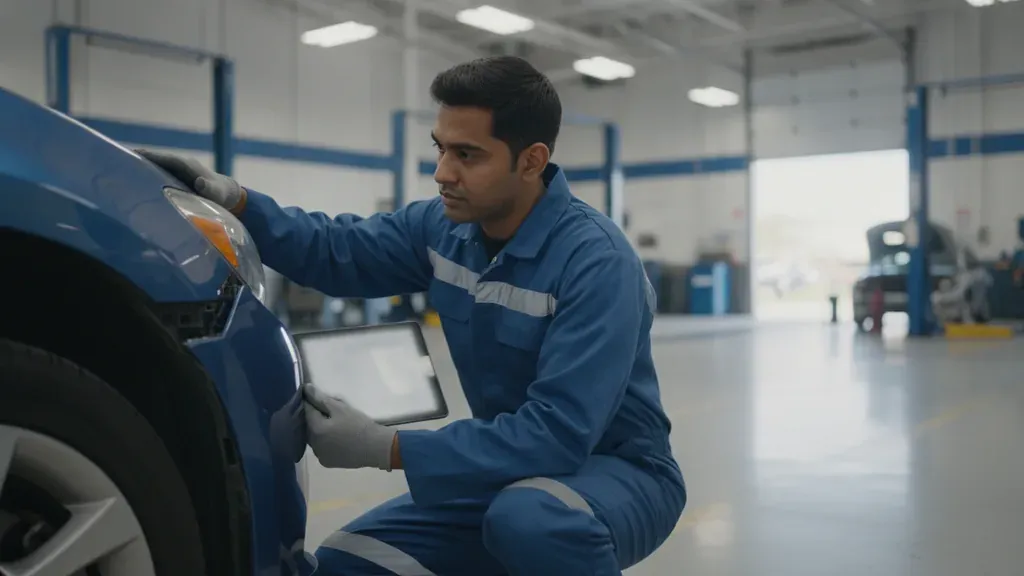
A collision repair shop can inspect the vehicle, prepare a repair estimate, document visible and hidden damage, explain the proposed repair operations, and communicate repair information during an insurance claim. That support can make the technical portion of the claim easier to understand.
Collision Center Orlando provides collision repair and insurance claim assistance for Orlando and Central Florida drivers. The team can help organize estimate information and explain repair findings, including changes that become clear during inspection or disassembly. The shop does not decide what an insurer must cover, does not control the policy, and cannot promise an appraisal result.
For general claim-navigation information, see the insurance claim assistance service page and the guide to navigating Florida auto insurance claims after an accident. For estimate questions, review the guide to understanding an auto body repair estimate. These resources address related repair and documentation steps, while this article focuses on the appraisal-clause decision point.
If your vehicle is in the Orlando area, you can request an estimate and bring the claim documents you have. A repair professional can explain what the vehicle inspection shows. For questions about policy interpretation, legal rights, deadlines, or a disputed claim, consult a qualified Florida attorney or licensed insurance professional.
Understanding a Florida insurance appraisal clause for auto damage can help you ask better questions when estimates differ. The policy controls, the dispute must be identified carefully, and no appraisal process guarantees coverage or payment. Collision Center Orlando can help with vehicle inspection, repair estimates, and claim documentation in Orlando, while qualified insurance and legal professionals can address policy and legal questions.